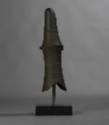
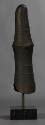
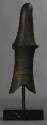
Object number1977.60.1
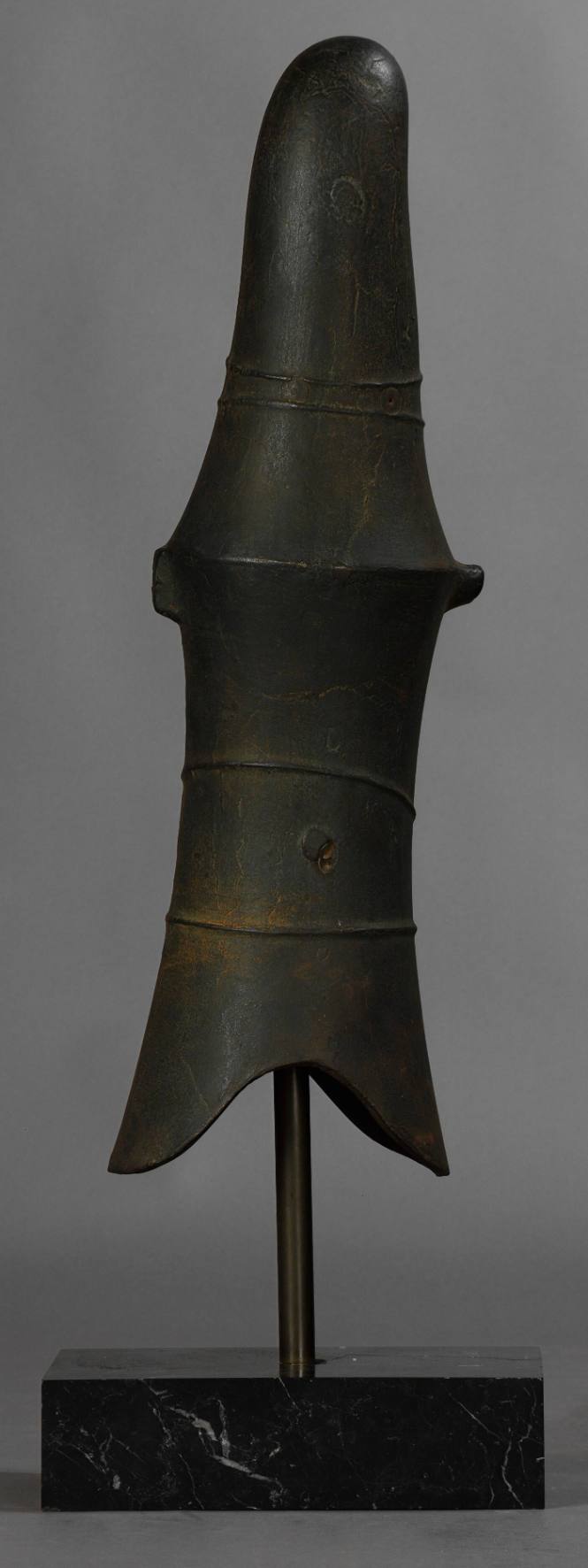
Bell Image
Date1956-1957
Artist
Isamu Noguchi
(American , 1904-1988)
CultureAmerican
MediumIron
Dimensions30 7/8 x 9 3/8 x 7 7/8 in. (78.42 x 23.81 x 20 cm)
Base: 3 1/2 x 13 1/2 x 9 1/4 in. (8.89 x 34.29 x 23.5 cm)
Base: 3 1/2 x 13 1/2 x 9 1/4 in. (8.89 x 34.29 x 23.5 cm)
Credit LineGift of Mr. and Mrs. Frederic Ossorio
On View
Not on viewPeriod20th c
Classification(s)
InscribedNot inscribed
Catalogue raisonnéExamined 8/18/2014BibliographyNoguchi: An Exhibition of Sculpture. Exhibition Pamphlet. Fort Worth, Texas: Fort Worth Art Center, 1961;
Noguch, Isamu. Isamu Noguchi: A Sculptor's World. New York and Evanston, Illinois: Harper & Row, 1968;
Botnick, Diane and Nancy Grove,. The Sculpture of Isamu Noguchi, 1924-1979: A Catalogue. New York and London: Garland Publishing, 1980.
Isamu Noguch: Bronze and Iron Sculpture. Exhibition catalogue, New York, Pace Gallery, 1988;
Mundy, James, The Frances Lehman Loeb Art Center: Vassar College The History and Collection (New York: Prestel Publishing, 2007), p. 136 (illustrated)
ProvenanceStable Gallery, New York, consigned 1958; Cordier & Ekstrom Gallery, New York, consigned after 1961; Mr. and Mrs. Frederic E. Ossorio; Vassar College Art Gallery., donated 1977; current collection, ongoing 1993, The Frances Lehman Loeb Art CenterExhibition History"Noguchi: An Exhibition of Sculpture," Fort Worth Art Center, May 1961-July 1961; "Isamu Noguch - Bronze & Iron Sculpture," Pace Gallery, May 13, 1988-June 11, 1988
DescriptionNoguchi was born in Los Angeles of a Japanese father and American mother but grew up in Japan from the age of two. He returned to America in 1918 for his higher education. After a brief period of medical studies at Columbia, Noguchi decided to become a sculptor, a career to which he devoted himself full-time in 1924. Bell Image (Polygenisis) was created when Noguchi began to spend more of his time in Japan after 1950 and is inspired by his exposure to the dotaku bells, which are used for rituals and serve also as emblems of wealth and power. It also draws on the forms of early Haniwa idols of Japan’s prehistory. This sculpture was created at a time when Noguchi was working on a number of large commissions, including the gardens for the UNESCO headquarters in Paris and the 2500 birthday of the Buddha in New Delhi, but was executed, together with a number of other cast iron works by the artist, in Japan.
Object information is a work in progress and may be updated as new research findings emerge.
To help improve this record, please email
loebcollections@vassar.edu

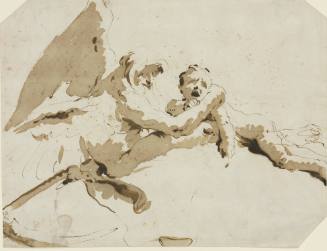
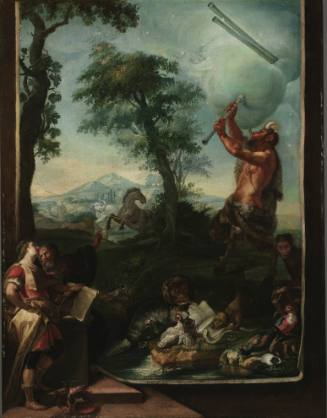
Giovanni Battista Tiepolo
c. 1750
Culture: Italian
![[Mailboxes in Maine]](/internal/media/dispatcher/18618/thumbnail)