Object number1993.9
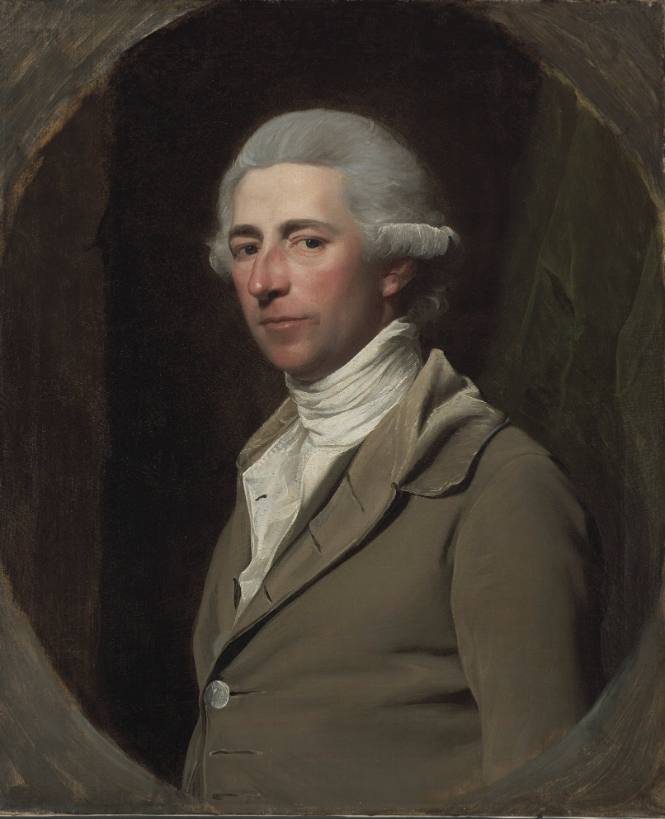
Portrait of a Man
Date1781
Artist
John Singleton Copley
(American, 1738-1815)
CultureAmerican
MediumOil on canvas
DimensionsFramed: 37 3/8 x 32 1/4 x 3 1/8 in. (94.93 x 81.92 x 7.94 cm)
Unframed: 30 x 25 in. (76.2 x 63.5 cm)
Unframed: 30 x 25 in. (76.2 x 63.5 cm)
Credit LinePurchase, Pratt Fund, Friends of the Frances Lehman Loeb Art Center Fund, and Francis Woolsey and Helen Silkman Bronson, class of 1924, Fund
On View
Not on viewPeriod18th c
Classification(s)
SignedSigned and dated (LL): J S Copley pinx 1781
BibliographyMundy, James, The Frances Lehman Loeb Art Center: Vassar College The History and Collection (New York: Prestel Publishing, 2007), p. 64 repr. Vassar Exhibitions
Exhibition HistoryPoughkeepsie, New York, The Frances Lehman Loeb Art Center, Vassar College, "American Stories 1800 - 1950," January 29 - April 17, 2016DescriptionCopley is known as the first great American portrait painter, although he left Boston in 1774 to live in Europe, settling in London for the remainder of his life, where he was made a member of the Royal Academy. This bifurcated career allows both America and Britain a legitimate claim to his artistic legacy. This portrait of a man with the traditional appellation of “Colonel Baker” is a work from the most productive and artistically accomplished years of Copley’s English period. It was painted three years after his great Romantic tour de force of Watson and the Shark and in the same year as his patriotic English history painting The Death of the Earl of Chatham. The honesty and intelligence of the portrayal of this sitter rivals that of Copley’s portrait of his fellow expatriate American artist, Benjamin West (Cambridge, Massa- chusetts, Harvard University Art Museums) and was painted shortly after that work was completed. It also has the livelier and less clinical brushwork that denotes much of his work while in England. While many of Copley’s English portraits are essentially concerned with the trappings of privilege —
the rich fabrics, honorific decorations, and jewelry — this portrait of a yet unknown sitter is the rare return by the master to portraits that penetrate the psyches of the sitters. It assumes Copley’s extensive first-hand know- ledge of the man and his world.
Terms
Object information is a work in progress and may be updated as new research findings emerge.
To help improve this record, please email
loebcollections@vassar.edu
![[Mailboxes in Maine]](/internal/media/dispatcher/18618/thumbnail)