
Object number2021.35
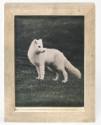
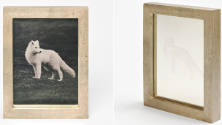
Arctic Fox (Vulpes lagopus) from Arctic Set
Date2012-2016
Artist
Christina Seely
(American, born 1976)
CultureAmerican
MediumDaguerreotype
EditionEdition varée 3 of 3 + 1 AP
DimensionsImage: 5 x 3 3/4 in. (12.7 x 9.5 cm)
Overall: 6 3/16 x 4 15/16 x 7/8 in. (15.7 x 12.5 x 2.2 cm)
Overall: 6 3/16 x 4 15/16 x 7/8 in. (15.7 x 12.5 x 2.2 cm)
Credit LinePurchase, Advisory Council for Photography
On View
Not on viewClassification(s)
Vassar Exhibitions
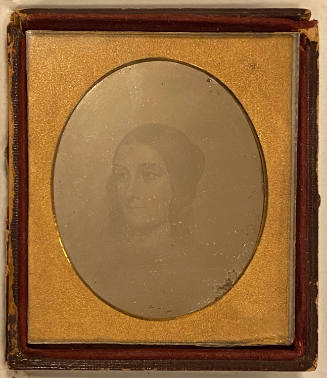
Label TextThe urgency of climate catastrophe, and contamination of the natural landscape, is perhaps best conveyed visually. Contemporary artists Patrick Nagatani and Christina Seely have approached this in very different ways. In his series Nuclear Enchantment, Nagatani constructed fantastical scenes of the southwestern landscape that he considered home, adding artificial color to his photographs and using collage to illustrate the legacy of the atomic bomb. The putrid green sky in Uranium Springs evokes the omnipresence of nuclear contamination in New Mexico, which in reality is invisible yet deeply felt. Nuclear testing in New Mexico has made residents, especially Indigenous populations, vulnerable to various cancers and other serious illnesses through exposure to contaminated water and soil. Christina Seely uses conventions of portraiture as old as photography itself to evoke empathy for animals that have been forced to adapt to the unthinkable consequences of climate change. Her photograph of a white arctic fox against a dark backdrop, its fur unable to keep pace to properly camouflage within a rapidly warming environment, is presented as a daguerreotype. Often called a “mirror with a memory” during its heyday in the nineteenth century, the daguerreotype is a photograph printed on a glass plate. It catches the viewer’s reflection, creating a kind of double portrait. Seely uses this form to amplify the reality that we are kin to animals and nonsentient living beings, our fates intimately connected.
Object information is a work in progress and may be updated as new research findings emerge.
To help improve this record, please email
loebcollections@vassar.edu
Currently Unidentified
c. 1849-1850
Culture: American