Object number2001.12.2
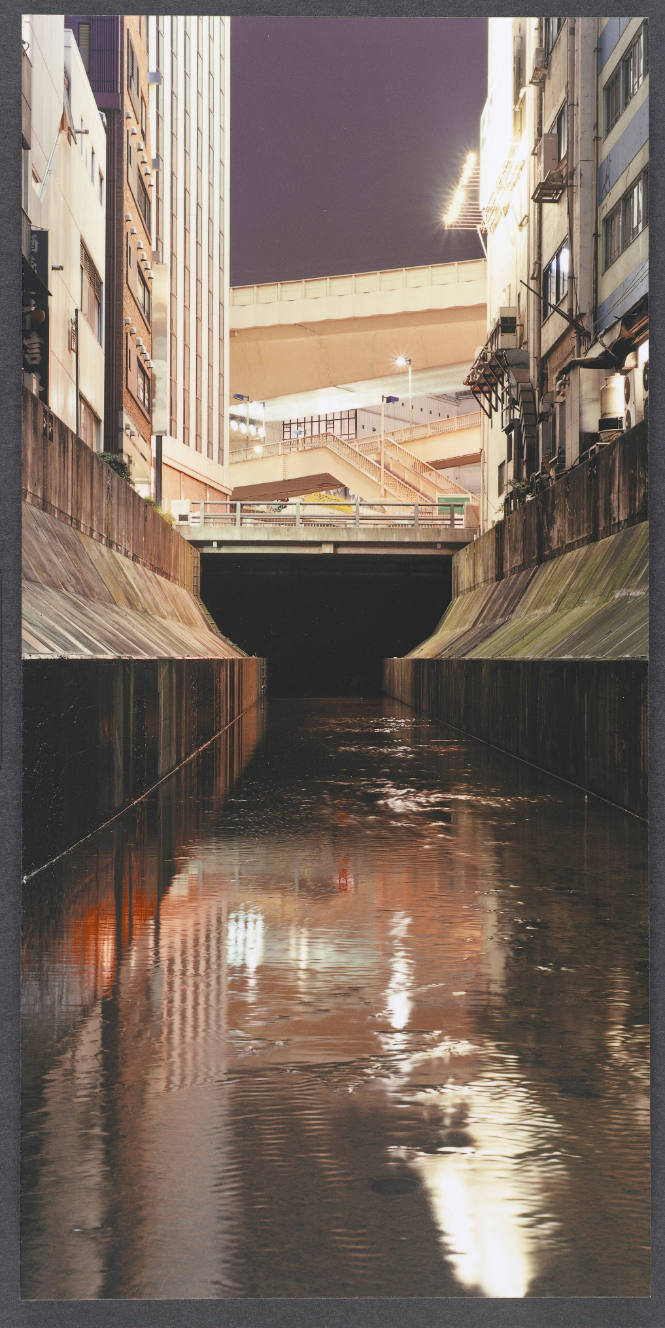
River 2
Date1993/94
Artist
Naoya Hatakeyama
(Japanese, 1958-)
CultureJapanese
MediumChromogenic print, mounted on aluminum
Edition8/15/2005
DimensionsMount: 21 1/4 x 10 1/2 in. (53.98 x 26.67 cm)
Sheet: 21 1/4 x 10 1/2 in. (53.98 x 26.67 cm)
Sheet: 21 1/4 x 10 1/2 in. (53.98 x 26.67 cm)
Credit LinePurchase, Horace W. Goldsmith Foundation Fund
On View
Not on viewPeriod20th c
Classification(s)
Vassar Exhibitions
Exhibition HistoryPoughkeepsie, New York, FLLAC, Vassar College, "Histories of Photography," July 5 - September 21, 2003. (see below)DescriptionIn 1993, the year Naoya Hatakeyama made the first exposure in what was to become his River series, photography’s imminent reinvention by digital tech- nology was only beginning to be glimpsed. The photographs of the series, which portray the cement-lined Sumida River as it winds throughout Tokyo, are produced entirely by means of predigital photographic processes, but the questions they pose about the medium’s veracity point the way ahead to a changed medium. For each of the photographs, Hatakeyama stood at the Sumida’s longitudinal center, pointed his camera downriver, and positioned his lens at the exact height where the cement walls to the left and right bank outward. The sideways banquet camera he used produced vertical images of a perfect 2:1 vertical format, which the receding horizon line splits into two perfect squares, one atop the other. Above the horizon one sees the physical city; below it, a ‘floating world’ of rippling reflections. Taken as a whole, the series pushes to the forefront many accidental aspects of photography, calling into question its claims as an impartial, fact-recording system of representation. The luscious but unreal colors of River 2 result from a lengthy exposure made under artificial lighting. The print’s outer edge — an inevitable feature of a photograph, but seldom of more than marginal concern to the viewer — here might be said to constitute the subject matter of the picture, at the center of which one finds only a black void. Finally, the bold horizontal line that splits the picture in two emphasizes photography’s structural basis in single-point perspective — a pictorial convention inherited from the art of drawing. ‘Straight’ though its means of creation may be, River 2 declares itself, in equal parts, a product of attention and artifice.
Terms
Object information is a work in progress and may be updated as new research findings emerge.
To help improve this record, please email
loebcollections@vassar.edu
![[Mailboxes in Maine]](/internal/media/dispatcher/18618/thumbnail)
Leonard Freed
1976
Culture: American