Object number1996.15.1
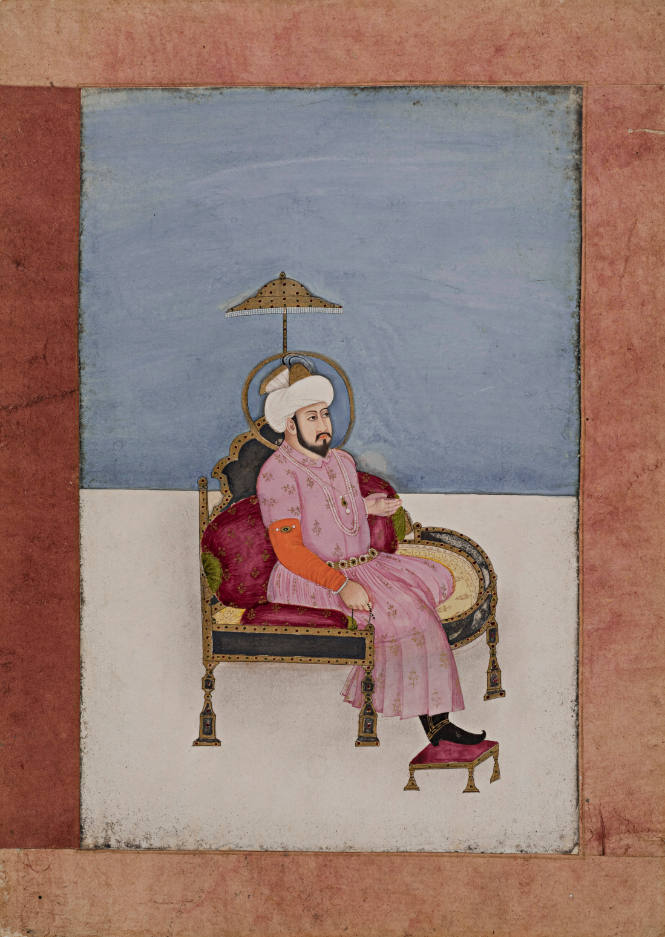
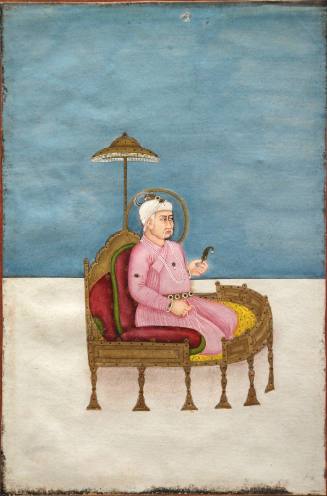
Portrait of Timur
Date1700s
Artist
Currently Unidentified
CultureIndian
MediumOpaque watercolor and gold on paper
DimensionsImage: 11 1/4 x 8 1/8 in. (28.5 x 20.6 cm)
Credit LineTransfer from Vassar College Libraries, Special Collections: Gift of Ruth Lamb Atkinson, class of 1918
On View
Not on viewPeriod18th c
Classification(s)
InscribedOn verso, by unidentified hand, upper right corner in ink: 1 [circled]; upper center in Arabic: [name]; center in Dutch: Deze is de eerste monarch / van het Hindostanse / rijk in name tijmoer" / "ling of den groten Ta" / "merlan. [This is the first monarch of the Hindustani empire, named Tijmurling or the great Tamerlane]
Exhibition HistoryPeoples of Asia Hall, extended loan to the American Museum of Natural History, New York, NY, August 1980 - September 1995Label TextNorthern India’s Mughal Empire was established in the early 16th century with the arrival of Persian settlers, who brought with them their Islamic faith and a tradition of miniature painting. Compositions illuminated historical or religious narratives, or were portraits of humans and nature. The works were then often assembled and bound into albums according to the patron’s tastes. Throughout their three-century rule, Mughal emperors demonstrated varying degrees of engagement with and acceptance of local, predominantly Hindu, traditions and culture. Leaders are often shown in profile or three-quarter view, with haloes, umbrellas, elaborate thrones, and luxurious textiles communicating their high status.
DescriptionDepiction of Amir Timur seated in a chair with his feet upon a stool and a golden halo around his head. He wears a pink and orange garment and strands of pearls and other jewelry. He sits with his foot upon a stool against a plain blue background with white ground.
Object information is a work in progress and may be updated as new research findings emerge.
To help improve this record, please email
loebcollections@vassar.edu
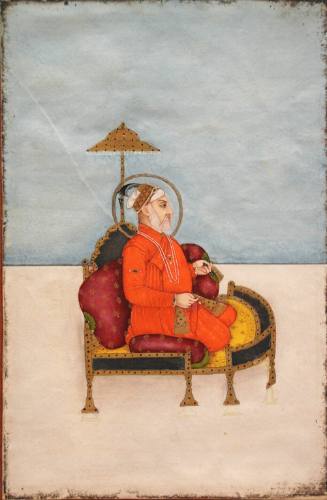
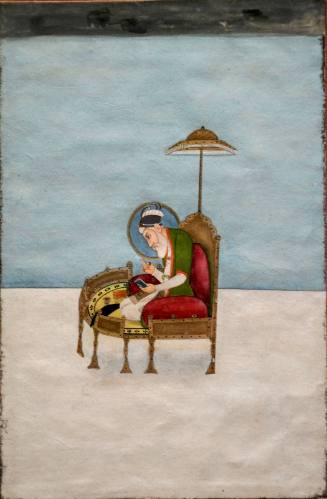
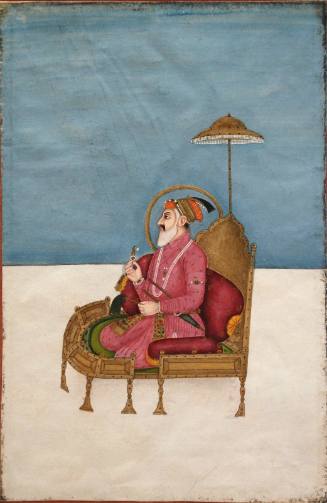
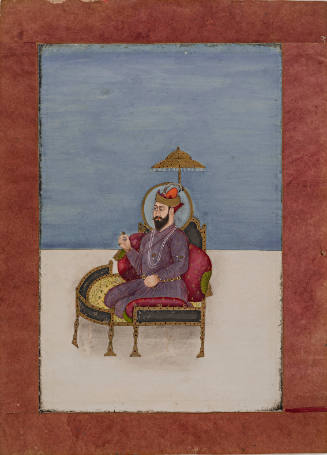
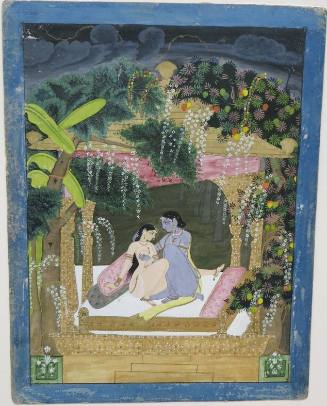
Currently Unidentified
c. 1790-1800
Culture: Indian [possibly Punjab Hills]
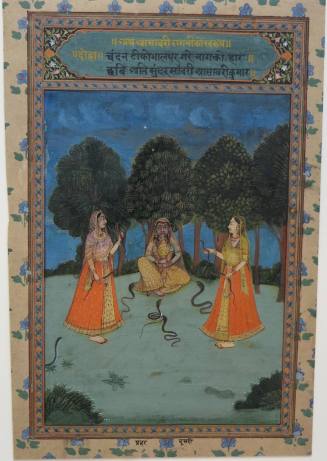
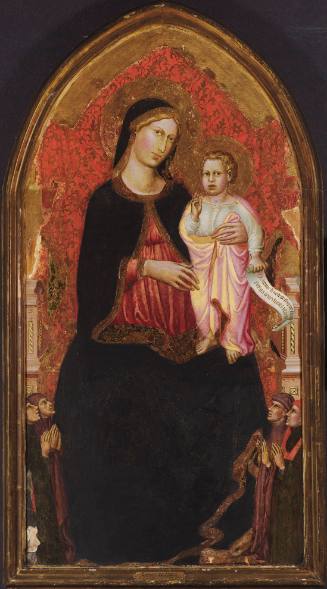
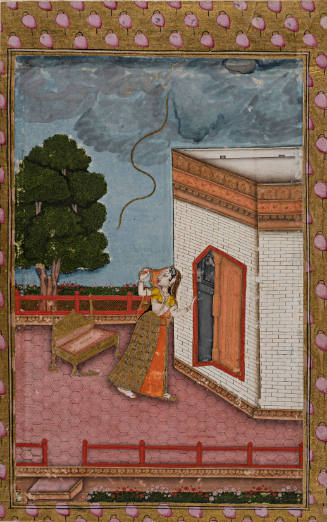
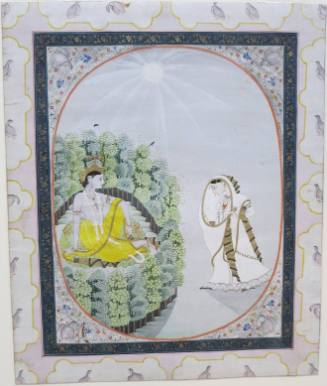
Currently Unidentified
c. 1850
Culture: Indian, Pahari (possibly Guler Workshop)