
Object number1991.35.37
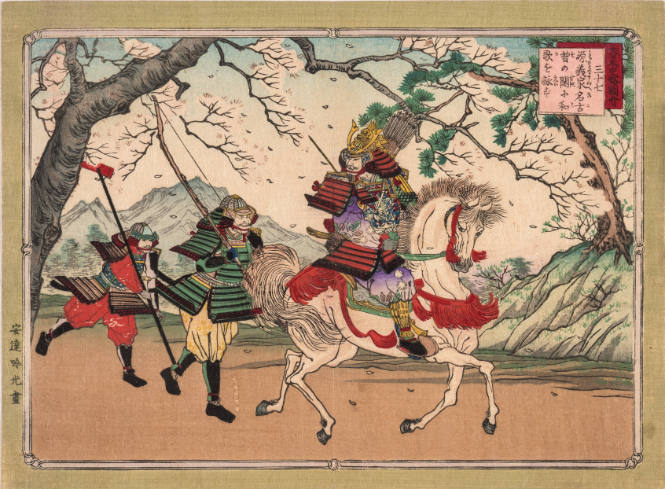
Number 37: Minamoto no Yoshiie Composes a Poem at the Nakoso Barrier
Portfolio/Seriesfrom the series Great Illustrated History of Japan
Date1885
Artist
Adachi Ginkō(安達 吟光)
(Japanese, 1853 - 1902)
Publisher
Ōkura Magobei (大倉孫兵衛)
(Japanese)
CultureJapanese
MediumWoodblock print (nishiki-e); ink and color on paper
DimensionsImage: 6 1/4 x 8 3/4 in. (15.88 x 22.23 cm)
Sheet: 7 x 9 7/16 in. (17.78 x 23.97 cm)
Sheet: 7 x 9 7/16 in. (17.78 x 23.97 cm)
Credit LineGift of Justine Lewis Keidel, class of 1937
Period19th c (Meiji period)
Classification(s)
SignedOn recto, lower left, artist's signature, written in black ink, printed in block: 安達吟光 (Adachi Ginkō)
InscribedOn recto, series title in upper right corner, in red cartouche, printed in block: 大日本史略図会 (Dai Nihon shiryaku zue (Illustrated History of Great Japan)
On recto, print title in upper right corner, in pink cartouche, printed in block: 三十七 源義家名古曾の関に和歌を詠ず (Sanjūshichi: Minamoto no Yoshiie Nakoso no Seki ni waka o eizu (Number 37: Minamoto no Yoshiie composes a poem at the Nakoso Barrier)
Label TextThe Nakoso Barrier, whose place-name is homophonous with the negative imperative “do not come,” became a well-known poetic device associated with separation and distance, and was traditionally imagined as a barrier capable of holding back the arrival of spring itself. Uniquely, Yoshiie’s poem describes the actual scenery before him rather than evoking the barrier’s name through conventional poetic wordplay. Despite having acted against the court’s wishes in launching the military campaign, Yoshiie’s poem was included in a prestigious anthology of Japanese verse. Within the emerging ideal of the cultured warrior, according to which samurai were expected to embody both military strength and literary refinement, this episode cemented Yoshiie’s reputation as an exemplary poet-warrior.
Racine Rieke, class of 2028
Object information is a work in progress and may be updated as new research findings emerge.
To help improve this record, please email
loebcollections@vassar.edu
Adachi Ginkō(安達 吟光)
1885
Culture: Japanese
Adachi Ginkō(安達 吟光)
1885
Culture: Japanese
Adachi Ginkō(安達 吟光)
1885
Culture: Japanese
![[Number] 36](/internal/media/dispatcher/58726/thumbnail)
![[Number] 5](/internal/media/dispatcher/58722/thumbnail)
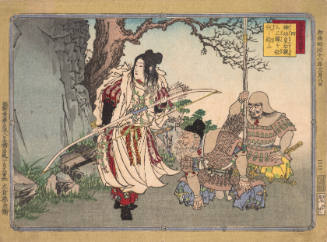
Adachi Ginkō(安達 吟光)
1885
Culture: Japanese
![[Number] 21](/internal/media/dispatcher/58740/thumbnail)
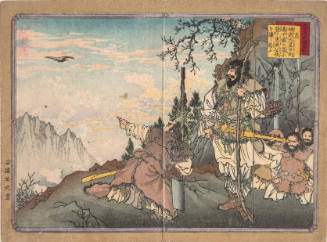
Adachi Ginkō(安達 吟光)
1885
Culture: Japanese
![[Number] 18](/internal/media/dispatcher/58731/thumbnail)
![[Number] 11](/internal/media/dispatcher/58728/thumbnail)
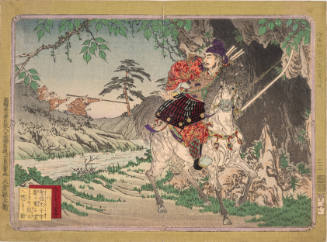
Adachi Ginkō(安達 吟光)
1885
Culture: Japanese
![[Number] 25](/internal/media/dispatcher/58744/thumbnail)