
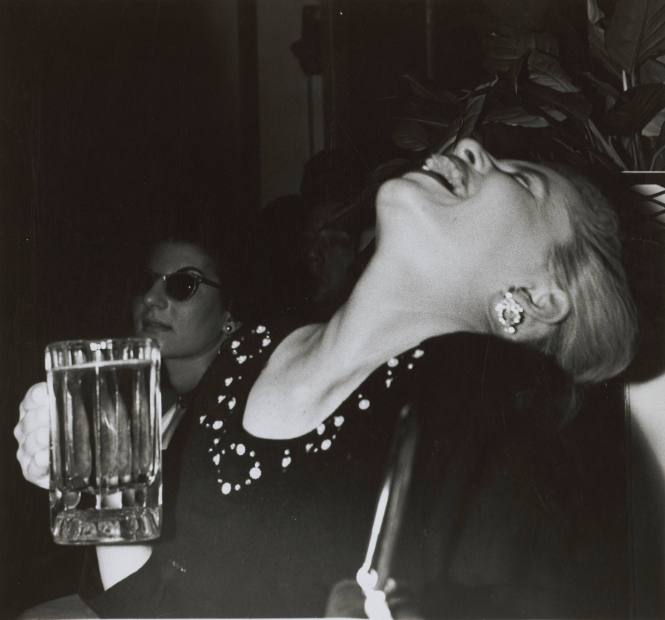
Object number1987.19.1
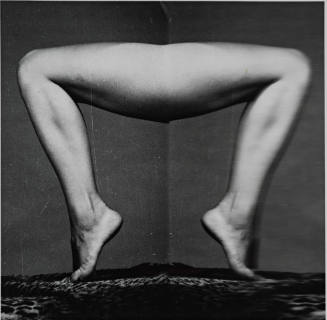
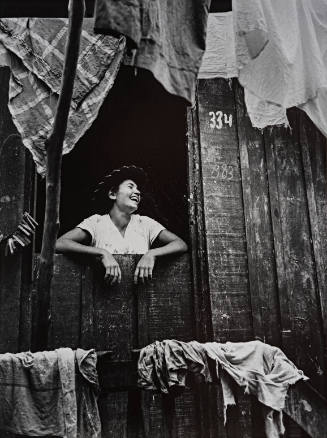
Woman Laughing
Daten.d.
Artist
Weegee (Arthur Fellig)
(American b. Austria, 1899-1968)
CultureAmerican
MediumGelatin silver print
DimensionsImage: 7 x 7 1/2 in. (17.8 x 19 cm)
Sheet: 10 x 8 3/16 in. (25.4 x 20.8 cm)
Sheet: 10 x 8 3/16 in. (25.4 x 20.8 cm)
Credit LineMuseum purchase
On View
Not on viewPeriod20th c
Classification(s)
InscribedOn recto, below the image in blue ink: [left arrow] 2" Trend [right arrow] / [illegible]
On verso, upper left corner circled in pencil: 30
On verso, center in blue ink: 3
On verso, bottom left corner crossed out with two lines in pencil: /XX/INV#78169/
MarkingsOn verso, stamped upper right in black ink: PHOTO FROM EURO[illegible] / is the expected credit line. This photo[illegible] / but a license is granted for its publi[illegible] / photograph only. It must not be loaned, sold or [illegible] / without [illegible]. Quoted price is [illegible] / duction on[illegible] prints must be retu[illegible] / Photo supp[illegible] European Picture Service. / 39 WEST 32nd STREET / NEW YORK 1, N.Y.
On verso, stamped in the center [within a circular outline] in blue ink: CREDIT PHOTO BY / WEEGEE
On verso, stamped in the lower center [within a square outline] in black ink with some handwritten elements (3, GREENWICH VILLAGE, AUGUST, 18-25): PICTURE LIFE / PHOTO NO. 3 / STORY GREENWICH VILLAGE / ISSUE AUGUST / PAGE 18-25
On verso, stamped at the bottom center in blue ink: PHOTO-REPRESENTATIVES / 155 EAST 42nd ST. NEW YORK [illegible] / [illegible] Hill 4-[illegible]
Vassar Exhibitions
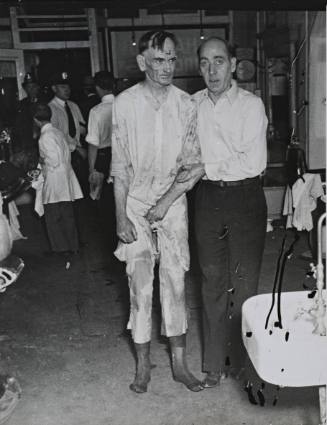
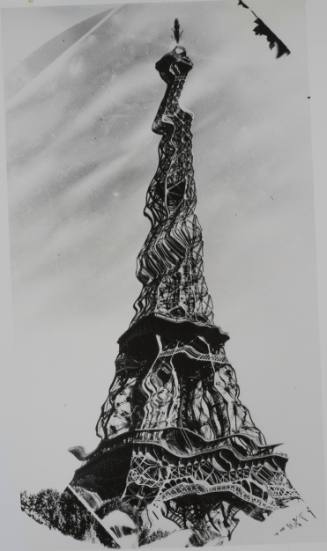
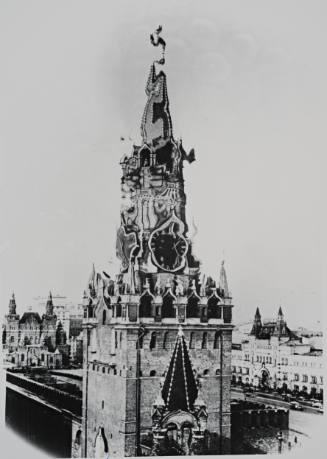
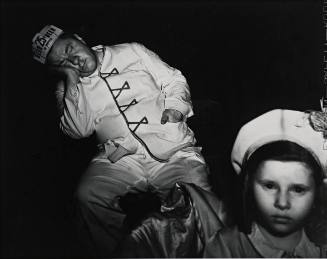
Label TextTabloid photography has long been a genre of bending or outright inventing “reality” for mass entertainment. The photographer known as Weegee was a masterful pioneer of sensational photography for public consumption in the mid-twentieth century. His subjects ranged from movie stars to crime scenes to mundane moments of everyday life. A self-styled celebrity himself, Weegee understood photography’s unique role in a culture that values sellable spectacles over adherence to truth. He was adept at using photographic technology to reveal the slippage between truth and fiction, often photographing at night and exploiting the unnatural brightness of the flash bulb to isolate his subjects, making everyday moments look grotesque, strange, and uncanny.
Object information is a work in progress and may be updated as new research findings emerge.
To help improve this record, please email
loebcollections@vassar.edu
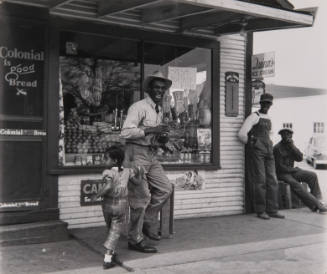
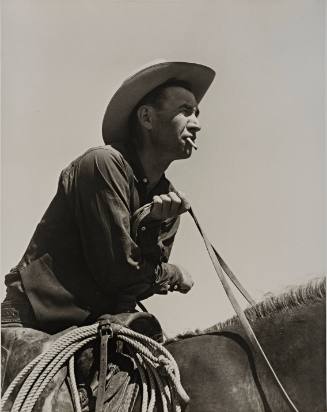
Arthur Rothstein
1939, printed later
Culture: American