Object number2022.28
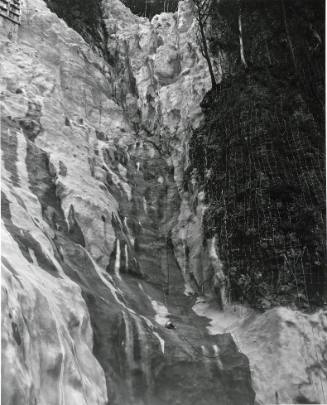
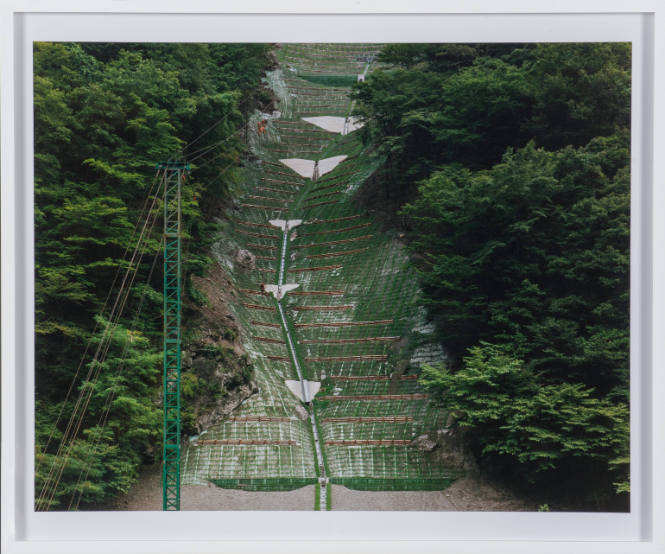
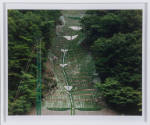
Kami Village, Nagano Prefecture
Date2004
Artist
Toshio Shibata
(Japanese, 1949-)
CultureJapanese
MediumChromogenic print, mounted to Dibond
EditionEdition 1 of 25
DimensionsImage: 17 1/2 x 22 1/4 in. (44.5 x 56.5 cm)
Sheet: 20 x 24 in. (50.8 x 61 cm)
Framed: 20 1/2 x 24 3/4 x 1 1/2 in. (52.1 x 62.9 x 3.8 cm)
Sheet: 20 x 24 in. (50.8 x 61 cm)
Framed: 20 1/2 x 24 3/4 x 1 1/2 in. (52.1 x 62.9 x 3.8 cm)
Credit LinePurchase, Advisory Council for Photography
On View
Not on viewPeriod21st c
Classification(s)
SignedOn an artist's label, signed in pencil: T. Shibata
InscribedOn a printed artist's label: Edition: / 1/25 / © Toshio SHIBATA / C-0308 [titled in Japanese] 2004 [unidentified Japanese character] / Kami Village, Nagano Prefecture 2004
ProvenancePurchased from Gallery LuisottiVassar Exhibitions
Label TextPhotography is not something that you can make. It cannot be forced. You have to accept the subject.
—Toshio Shibata
Toshio Shibata began photographing Japan’s infrastructure in 1980, developing a practice rooted in careful observation and selective editing. Educated initially as a painter at Tokyo National University, he carried principles of surface and composition into photography. His transition to exclusive color work in 2006 marked a shift from what he calls “shape and tonality” to “atmosphere.”
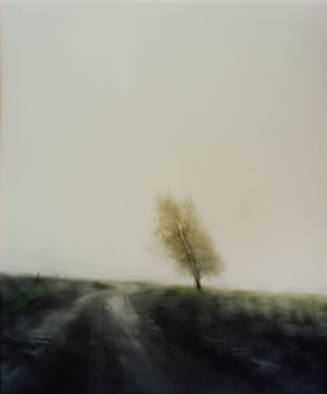
This terraced concrete retention system, reinforced with green mesh netting, exemplifies his approach to Japan’s engineered landscape. The anti-erosion barriers cascade down the mountainside in systematic intervals, weathered and intermittently reclaimed by vegetation. Working with an 8 × 10 camera, Shibata exposes hundreds of plates but shows only a select few—choosing images that avoid what he calls “too much reality, too much identifiable sense of time and place.” Devoid of figures, the image still registers human labor, inviting contemplation of natural endurance and environmental intervention.
DescriptionFuji Crystal archive printTerms
Object information is a work in progress and may be updated as new research findings emerge.
To help improve this record, please email
loebcollections@vassar.edu