Object number2008.1
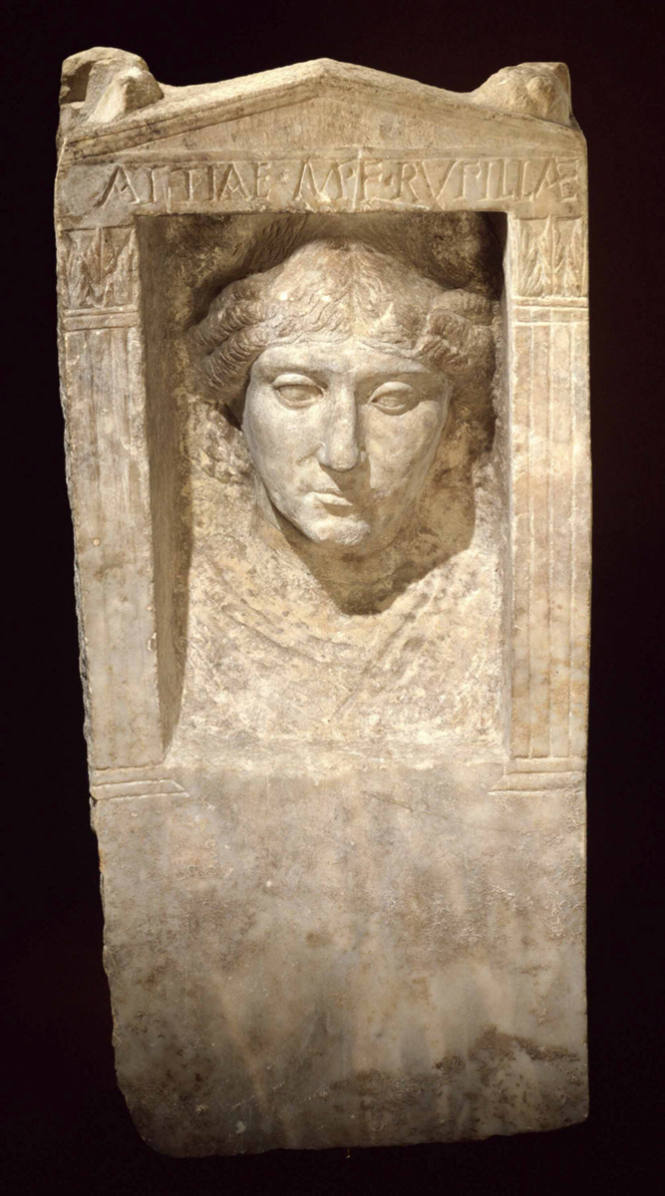
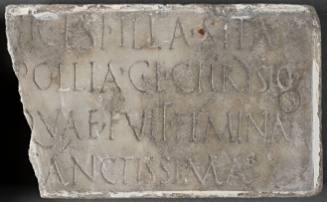
Funerary Relief of Attia Rufilla
DateMid 1st c
Artist
Roman
(Roman, NA)
CultureRoman
MediumMarble
Dimensions28 x 14 x 6 in. (71.12 x 35.56 x 15.24 cm)
Credit LineGift of Joseph Coplin, class of 1988, and Robin Beningson in memory of Renee D. Beningson, and purchase, Francis Woolsey and Helen Silkman Bronson, class of 1924, Fund
On View
On viewPeriodMid 1st c
Classification(s)
Vassar Exhibitions
Label TextThis funerary monument with portrait bust is inscribed “Attiae M(arci) f(iliae) Rufillae,” or “Of Attia Rufilla, daughter of Marcus.” Surrounding the portrait is a stylized temple composed of columns and a roof with sculptures placed at the corners or apex of a pediment called, in classical architecture, akorteria. Attia Rufilla presumably belonged to a wealthy family with the means to commission this personalized, ornate monument. Given mention of her father’s name, she was likely not married and the simplicity of the marker suggests it belonged to a niche within a larger family tomb.
Object information is a work in progress and may be updated as new research findings emerge.
To help improve this record, please email
loebcollections@vassar.edu
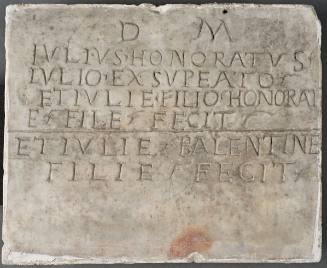
Classical (Ancient European: Roman)
2nd-3rd c
Culture: Roman
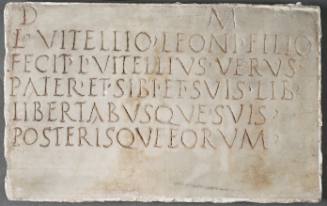
Classical (Ancient European: Roman)
1st-3rd c
Culture: Roman
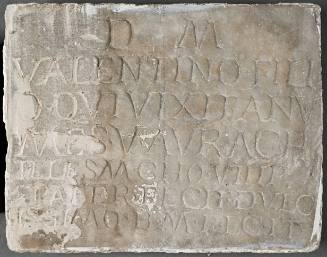
Classical (Ancient European: Roman)
3rd c
Culture: Roman
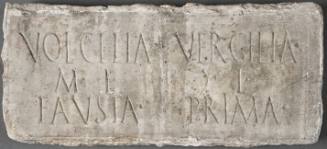
Classical (Ancient European: Roman)
1st - 2nd c
Culture: Roman
Classical (Ancient European: Roman)
1st - 3rd c
Culture: Roman
Classical (Ancient European: Roman)
1st c BC - 3rd c CE
Culture: Roman
Classical (Ancient European: Roman)
1st c BCE - 3rd c CE
Culture: Roman
Classical (Ancient European: Roman)
1st - 3rd c
Culture: Roman
Classical (Ancient European: Roman)
1st c BCE- 1st c CE
Culture: Roman