

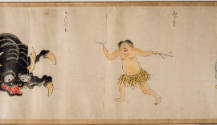
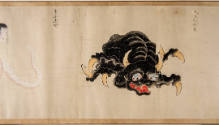
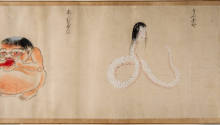
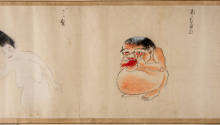
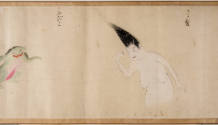
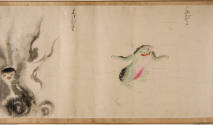
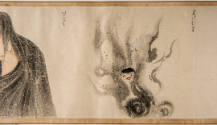
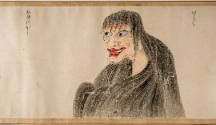
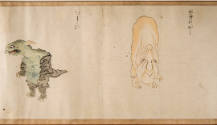
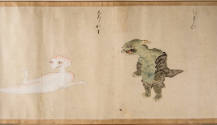
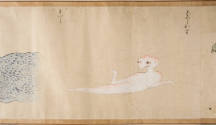
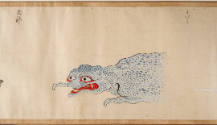
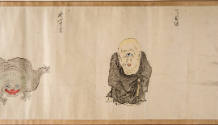
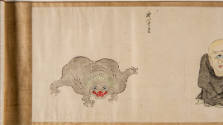

Object number2005.17.2
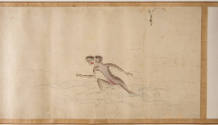
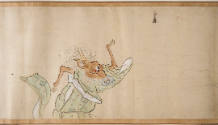
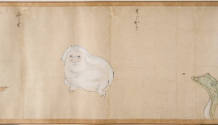
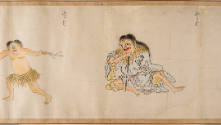
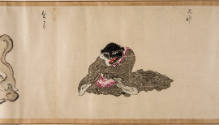
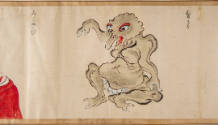
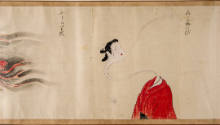
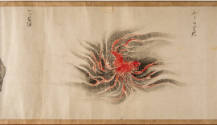
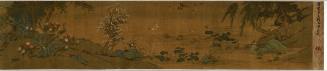
Monster Scroll (2 of 2 scrolls)
Artist
Japanese
(Japanese, NA)
CultureJapanese
MediumInk and colors on paper
DimensionsOverall (Open): 12 1/2 × 306 1/2 in. (31.8 × 778.5 cm)
Image: 10 3/4 × 292 1/2 in. (27.3 × 743 cm)
Image: 10 3/4 × 292 1/2 in. (27.3 × 743 cm)
Credit LinePurchase, Betsy Mudge Wilson, class of 1956, Memorial Fund
Period18th / 19th c (Edo Period)
Classification(s)
Label TextThroughout Japan's Edo period (1603-1867), scholars and artists compiled encyclopedias of the known world, providing illustrated catalogs for plants, animals, histories, and other subjects. There was also an impulse to assign form to that which was not visible; specifically, entities known as yokai, which can be translated as monster, ghost, specter, or spirit. Also referred to as bakemono, or shape shifters, these entities were thought to have the capacity to cause problems ranging from mischief to murder. Sudden misfortunes such as natural disasters and diseases were often attributed to yokai, and in tandem with the Edo era urge to categorize phenomena, artists created extensive, labeled catalogs of the invisible figures believed responsible. These unusual, even slightly comical, appearances of the figures offered viewers with an avenue to visualize the yokai, and perhaps take away some of their perceived power.
Object information is a work in progress and may be updated as new research findings emerge.
To help improve this record, please email
loebcollections@vassar.edu

Italian
c. 350 BCE
Culture: Italian
Image Not Available
for Fragment of architectural relief with decoration of palmettes, scrolls, etc.
Classical (Ancient European: Italian?)
1st c BCE
Culture: European
Classical (Ancient European: Italian)
1st c
Culture: Italian

![Tōkichi [?] and Niyōbotsu from the play Higashiyama sakurazōshi](/internal/media/dispatcher/14584/thumbnail)
Utagawa Kunisada
1851
Culture: Japanese