
Object number2002.31.5
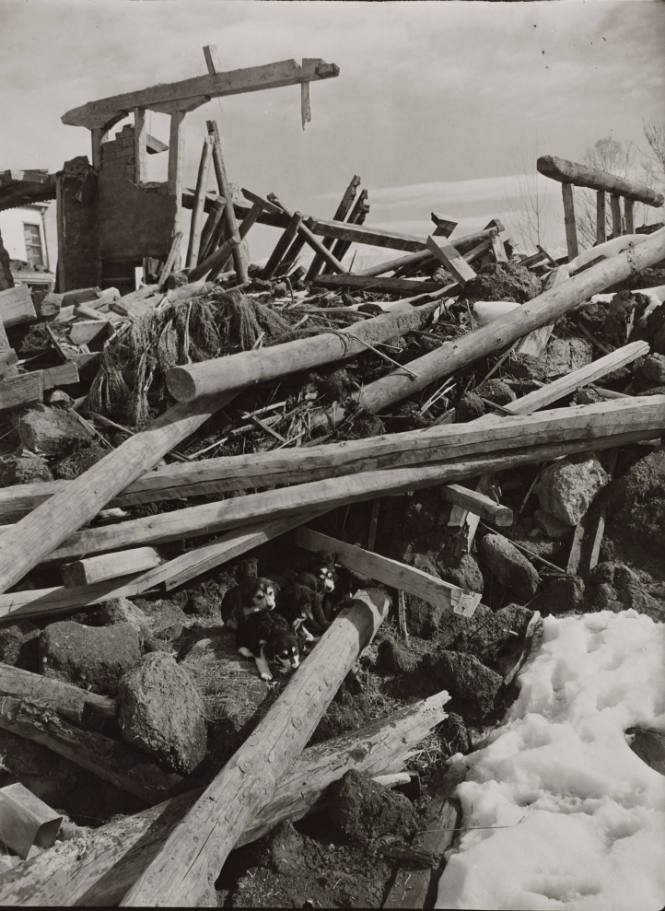
Puppies after Earthquake, Erzincan, Turkey
Date1940
Artist
Margaret Bourke-White
(American, 1904-1971)
CultureAmerican
MediumGelatin silver print
DimensionsImage: 9 x 6 in. (22.86 x 15.24 cm)
Sheet: 9 1/2 x 7 1/8 in. (24.13 x 18.1 cm)
Sheet: 9 1/2 x 7 1/8 in. (24.13 x 18.1 cm)
Credit LineGift from the Michael and Joyce Axelrod collection (Joyce Jacobson, class of 1961) in honor of Howard Greenberg
On View
Not on viewPeriod20th c
Classification(s)
InscribedOn verso, upper center in pencil: Tksh Set - Erzincan [underlined] / Ruins - Note new-born puppies which / have been deserted + will soon starve
On verso, upper center in blue pencil: X Turkey [underlined] / X / X Earthquake devastation [underlined]
On verso, upper left corner [circled]: 158f
On verso, along right side edge in pencil: PIC# 732694
On verso, bottom center in pencil: MB87
On verso, lower left corner: [checkmark in blue pencil] / 5970 [stamped in blue ink] - B [handwritten in black pencil] - 1 [ handwritten in blue pencil]
BibliographyMB 87Vassar Exhibitions
Label TextThere is perhaps nothing more emblematic of our trust in photographs as instruments of truth than the twentieth-century traditions of photojournalism and documentary photography. As North Americans endured the hardships of industrialization, world wars, and the Great Depression, trusted photojournalists captured real experiences using subtle but powerful strategies of manipulation. Truth and artifice are thoroughly entangled in their photographs.
Working for Life magazine, Margaret Bourke-White intensified the emotional impact of her image in the aftermath of an earthquake by including a cluster of puppies in the foreground. Lewis Hine used the camera as a tool of social reform, photographing immigrants at Ellis Island and children working in factories. In 1911 he was hired by the National Child Labor Committee to make images that were used to pass child labor laws. His photographs were strengthened—rather than undermined—by their familiar, compelling compositions, which encouraged viewers’ empathy. Hine’s Ellis Island Italian Madonna overtly borrowed the recognizable, emotionally evocative trope of the Madonna and child. Likewise appropriating religious iconography, Farm Security Administration (FSA) photographer Dorothea Lange carefully cropped her photograph of a woman and children in a tripartite composition in one of the most famous (and infamously manipulated) photographs of the Great Depression. The woman was identified years later as Florence Owens Thompson, a Native American who felt that the details of her life were eclipsed by the power of the photograph as a symbol of the need for unprecedented levels of government social services.
Object information is a work in progress and may be updated as new research findings emerge.
To help improve this record, please email
loebcollections@vassar.edu
Margaret Bourke-White
1942
Culture: American


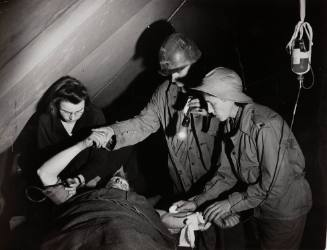

Margaret Bourke-White
1937
Culture: American

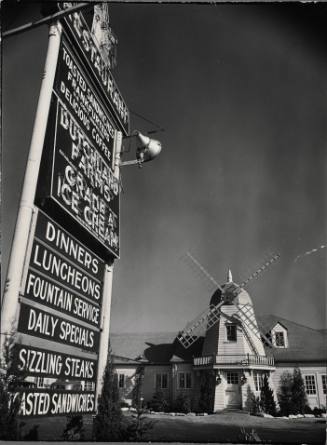
Margaret Bourke-White
1937
Culture: American
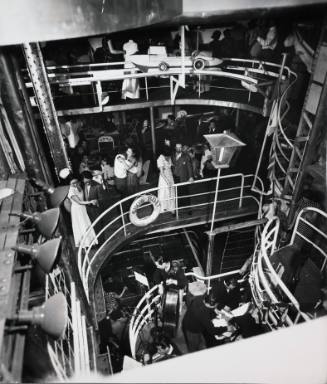
Margaret Bourke-White
1952
Culture: American
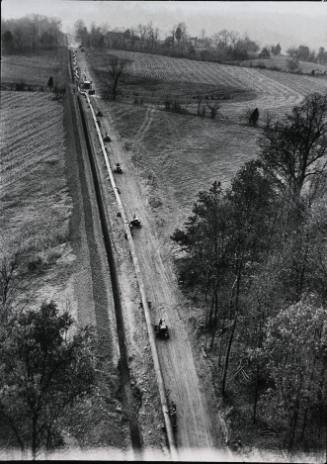
Margaret Bourke-White
1953
Culture: American
Margaret Bourke-White
1953
Culture: American