Object number1987.53.142
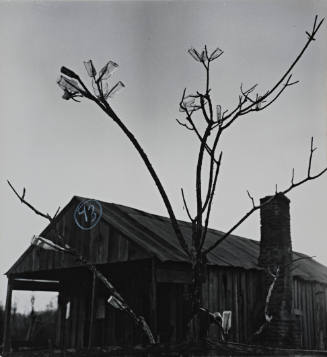
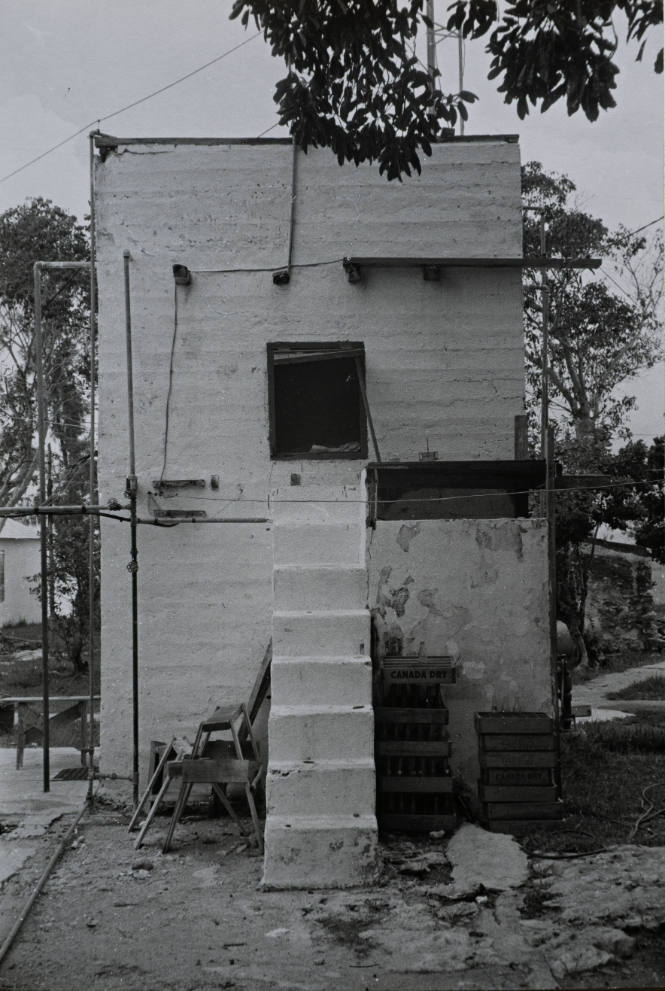
Hut, Bahamas
Date1960
Artist
Rosalie Thorne McKenna
(American, 1918-2003)
CultureAmerican
MediumGelatin silver print
DimensionsImage: 9 1/4 x 6 1/4 in. (23.5 x 15.9 cm)
Matted: 22 x 16 in. (55.9 x 40.6 cm)
Matted: 22 x 16 in. (55.9 x 40.6 cm)
Credit LineGift of the artist
On View
Not on viewPeriod20th c
Classification(s)
InscribedOn verso, by artist, lower center in pencil: #11 / Bahamas 1960; by unidentified hand, lower right corner in pencil: 87.53.142
MarkingsOn verso, stamped upper center: PHOTO BY: / ROLLIE MCKENNA / 438 EAST 88 STREET / NEW YORK 28, N. Y. / TEL. ENRIGHT 9-3889 / Not To Be Reproduced / Without Permission. / Please Credit With Photo; stamped center: ASMP MEMBER / AMERICAN SOCIETY OF MAGAZINE PHOTOGRAPHERS
ProvenanceGift of the artistVassar Exhibitions
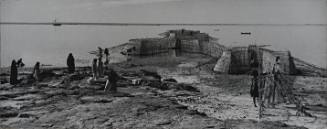
Label TextMcKenna’s personal travels often yielded unexpected subject matter and allowed her to experiment with her medium free from the parameters of assignments. Though women were rarely invited to visit Kuwait in the 1950s, McKenna and her traveling companion Pamela Preston accompanied two nephews of the ruling Sheik and Ezzat Gaaffa, the Sheik’s secretary. This extraordinary opportunity was one of McKenna’s earliest trips abroad. She photographed there with a Rolleiflex and a Leica III F that she bought at a bazaar—both portable and easy to use while traveling. She was so eager to see the photographs from this trip that she “processed the film in 80-degree murky water at the 100-degree lab of the Kuwait Oil Company,” according to her own recollection. In 1960, when her father Henry Thorne passed away, McKenna inherited a property known as The Bang Bang Club, a bonefishing camp located on Andros Island in the Bahamas. She eventually sold the property to an oceanographer but first took the opportunity to photograph “anything that caught my eye,” as she remembered. The resulting pictures continued to hone her observations of people, architecture, and the geometry of place.
DescriptionClay/cement rectangular, vertical building with cement stairs leading to opening at upper level; crates of soda bottles next to stairsTerms
Object information is a work in progress and may be updated as new research findings emerge.
To help improve this record, please email
loebcollections@vassar.edu