Object number2014.32
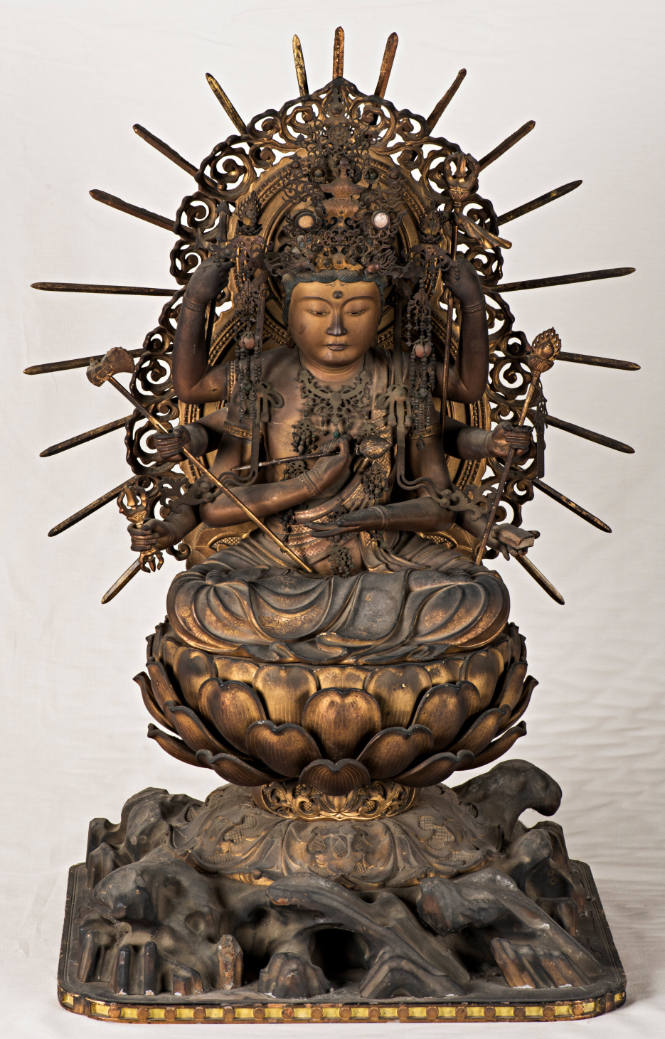
Daizuiku Bosatsu
Dateearly 17th c
Artist
Currently Unidentified
CultureJapanese
MediumGilt cypress wood
Dimensions31 1/2 × 18 7/8 × 16 9/16 in. (80 × 48 × 42 cm)
Credit LinePurchase, Friends of the Vassar Art Gallery Fund
On View
On viewPeriodEdo period
Classification(s)
Label TextSeated on her lotus throne, the eight-armed Daizuiku Bosatsu holds a series of implements that she can use to assist devotees. She is one of countless bosatsu or bodhisattvas - Buddhist beings who direct their energies to reduce suffering by bringing compassionate action in the to world. Known in Sanskrit as Mahapratisara, or Great [Protective] Amulet, Daizuiku is one of a group of five bodhisattvas known collectively as the Pancha Raksha, or Five Protectors, whose practices developed in India by the seventh century CE. She is believed to protect adherents form fire, poison, contagious diseases, and other problems, while also providing them blessings, such as easy childbirth. These practices were considered so effective that within two hundred years, texts dedicated to Pancha Raksha rituals had spread to China and Japan.
Object information is a work in progress and may be updated as new research findings emerge.
To help improve this record, please email
loebcollections@vassar.edu