Object number1864.1.8
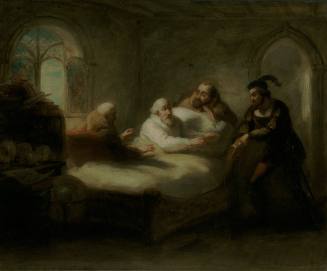
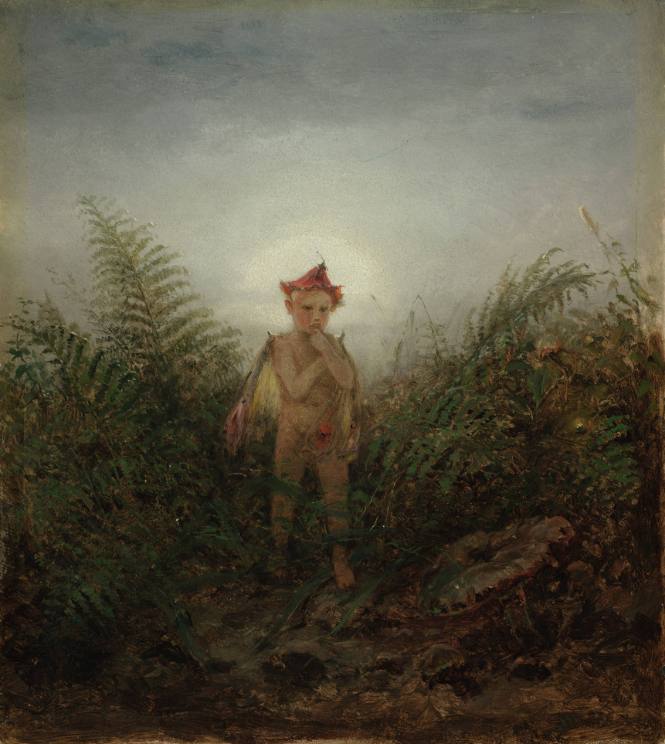
The Culprit Fay
Date1859
Artist
George Henry Boughton
(American, 1833-1905)
CultureAmerican
MediumOil on board
DimensionsUnframed: 11 1/4 x 10 in. (28.58 x 25.4 cm)
Framed: 16 1/4 x 15 x 1 in. (41.28 x 38.1 x 2.54 cm)
Framed: 16 1/4 x 15 x 1 in. (41.28 x 38.1 x 2.54 cm)
Credit LineGift of Matthew Vassar
Period19th c
Classification(s)
SignedNot signed
ProvenanceCollections: Elias MagoonVassar Exhibitions
Exhibition History"Every Patron a Pericles," The Century Association, New York, NY, 14 January - 21 February 1997.Poughkeepsie, New York, The Frances Lehman Loeb Art Center, Vassar College, "American Stories 1800 - 1950," January 29 - April 17, 2016
Label TextThe American landscape enchanted both artists and writers of the nineteenth century. While traversing the Hudson Highlands in the summer of 1819, the New York poet Joseph Rodman Drake wrote an epic poem titled “The Culprit Fay.” In a fantastical portrait of the Hudson River, a fay (also known as a fairy) undergoes harrowing trials to regain his honor after falling in love with a human maiden. The poem is one of few early American fairy tales. George Henry Boughton, a New York painter, took inspiration from the poem for this painting. The disgraced fay wears a red cap, a garment traditionally worn by fairies in Irish folklore. This may reflect widespread anti-Irish sentiment in the latter half of the nineteenth century, when many Irish Catholics escaped the Great Famine by immigrating to Protestant Boston and New York. By illustrating the poem, Boughton drew connections between the American landscape, national mythologies, and nineteenth-century social prejudices.
— Annabelle Blue ’28
Object information is a work in progress and may be updated as new research findings emerge.
To help improve this record, please email
loebcollections@vassar.edu