
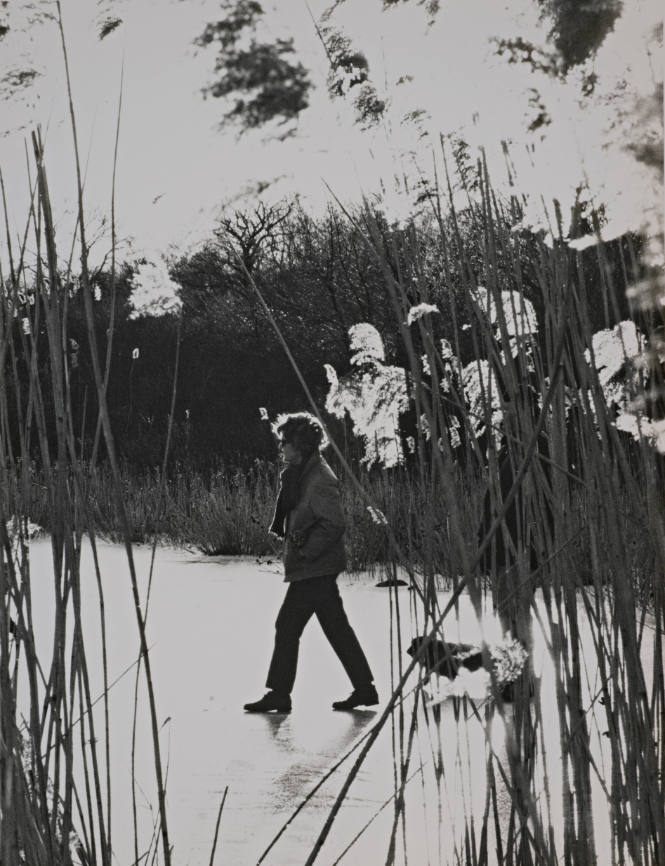
Object number1987.53.168
Patricia D. Willson, Wamphassuc Point, Stonington, Connecticut
Datec. 1970
Artist
Rosalie Thorne McKenna
(American, 1918-2003)
CultureAmerican
MediumGelatin silver print
DimensionsImage: 9 1/2 x 7 1/4 in. (24.1 x 18.4 cm)
Sheet: 9 15/16 x 8 in. (25.2 x 20.3 cm)
Matted: 22 x 16 in. (55.9 x 40.6 cm)
Sheet: 9 15/16 x 8 in. (25.2 x 20.3 cm)
Matted: 22 x 16 in. (55.9 x 40.6 cm)
Credit LineGift of the artist
On View
Not on viewPeriod20th c
Classification(s)
InscribedOn verso, by artist, upper edge in pencil: Pat Willson / see Mac[...?] File; center in ink: Patricia D. Willson. c 1970 / Whamphassuc Point Stonington Ct 1970; by unidentified hand, lower right corner in pencil: 87.53.168
MarkingsOn verso, stamped center: Photo By: / ROLLIE MCKENNA / ONE HANCOX STREET / STONINGTON, CONN. / AREA CODE 203 533-0110 / Not To Be Reproduced / Without Permission / Please Credit With Photo
On printed label, on verso center: © Rollie McKenna, Photographer / 1 Hancox Street / Stonington, CT 06378 / (203) 535-0110/2126
ProvenanceGift of the artistVassar Exhibitions
Label TextIn 1965, McKenna relocated to the picturesque coastal village of Stonington, Connecticut, where she had periodically escaped from New York City since purchasing a house there in 1961. In 1962, Patricia (Pat) D. Willson purchased the house next door to McKenna’s. “Defying friends’ advice,” she recalled affectionately, “we unceremoniously tore down the fence between our properties to create a large lawn we would share.” There McKenna and Willson lived and raised three of Willson’s four children together. Their partnership lasted nearly two decades, until Willson’s death in 1981. Nicknamed “The Compound,” McKenna described the adjoining properties as a utopian arrangement in which she “acquired not only a loving family but still another name—‘O.M.’—Other Mother.” The familial love that McKenna shared with Pat and the Willson children—as well as the creative freedom she cultivated in Stonington—is evident in her photographs from those years. Personal freedom and stability inspired new experimentation with photography. While living by the seaside in Stonington, she wrote: “What keeps me close to the water is not just the physical location of my house but opportunities to photograph from my windows.”
DescriptionWoman with scarf seen through reeds
Object information is a work in progress and may be updated as new research findings emerge.
To help improve this record, please email
loebcollections@vassar.edu
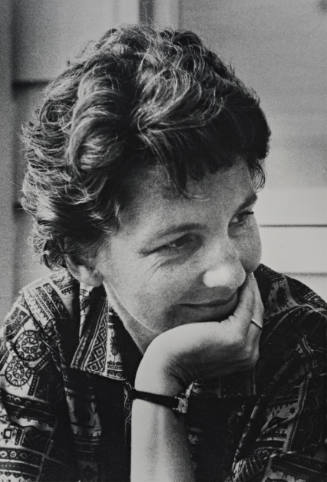
Rosalie Thorne McKenna
1967
Culture: American
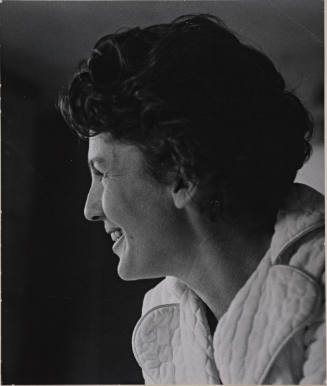
Rosalie Thorne McKenna
1961
Culture: American
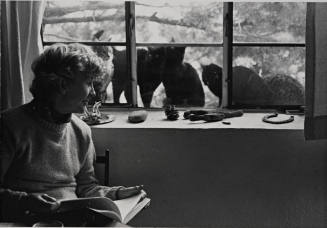
Rosalie Thorne McKenna
1958
Culture: American