Object number1987.53.75
Roman Vishniac
Date1958
Artist
Rosalie Thorne McKenna
(American, 1918-2003)
CultureAmerican
MediumGelatin silver print
DimensionsImage: 6 7/16 x 10 in. (16.4 x 25.4 cm)
Matted: 22 x 16 in. (55.9 x 40.6 cm)
Matted: 22 x 16 in. (55.9 x 40.6 cm)
Credit LineGift of the artist
On View
Not on viewPeriod20th c
Classification(s)
SignedOn reverse of mount, initialed upper right in ink: RMC
InscribedOn reverse of mount, possibly by artist, center in ink: XII -21; in pencil: 1958; by unidentified hand, upper left corner in red ink: 1.; lower right corner in pencil: 87.53.75
MarkingsOn reverse of mount, partially obscured stamp upper left: Photo By: / ROLLIE McKENNA / [copyright credit label] / Please Credit With Photo; stamped upper right: COPYRIGHT
ProvenanceGift of the artistVassar Exhibitions
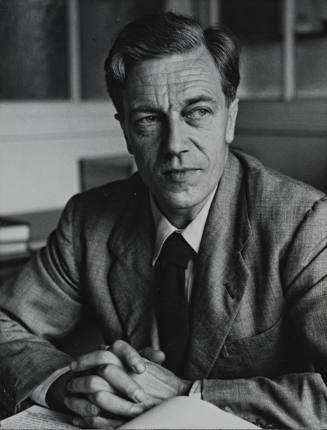
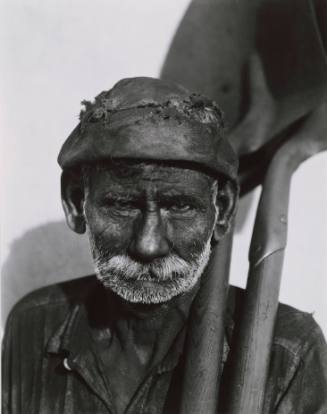
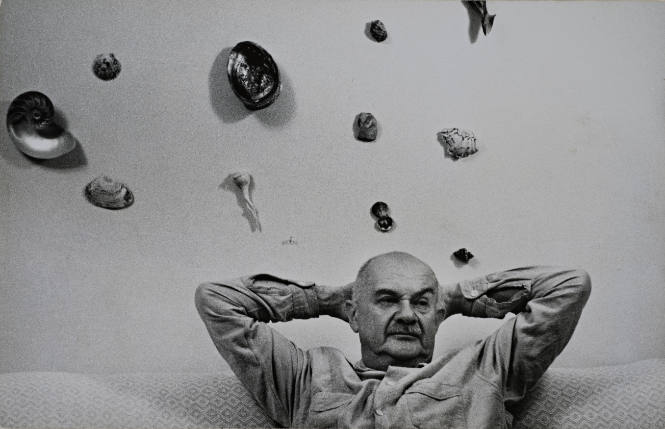
Label TextIn 1958, McKenna photographed Russian American photographer Roman Vishniac with her Graflex camera. Vishniac came to the United States disguised as a Bolshevik soldier in order to seek asylum from political and racial oppression during World War II. He was known for photographing European Jewish life before the Holocaust. When he immigrated to the U.S. he became a photo-microbiologist, using color photography and an Arriflex camera for scientific research. McKenna photographed Vishniac in the naturalistic setting of Central Park as well as in Woods Hole, Massachusetts near his home, both places where he conducted field research. Observing him at work, she recognized his fascination with and respect for the natural world, which she shared. While editing her pictures of Vishniac, McKenna marked up her contact sheets with several notes to tightly crop the images to show only his eyes. Likely feeling an affinity with Vishniac and his attention to his subjects, McKenna focused on his eyes as a powerful tool for the keen observational skills he displayed in his own work.
DescriptionMounted to board and hinged to the backing mat on the upper edge on the reverse of the mount. Man sitting on couch with hands behind his head and myriad shells on wall behind him.Terms
Object information is a work in progress and may be updated as new research findings emerge.
To help improve this record, please email
loebcollections@vassar.edu