Object number1987.53.72
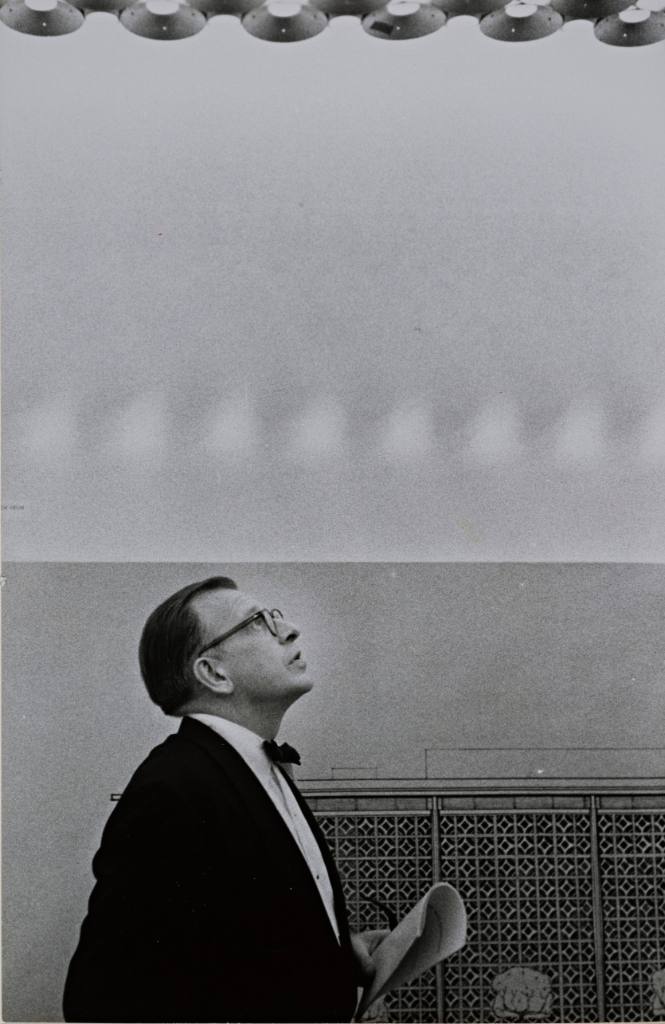
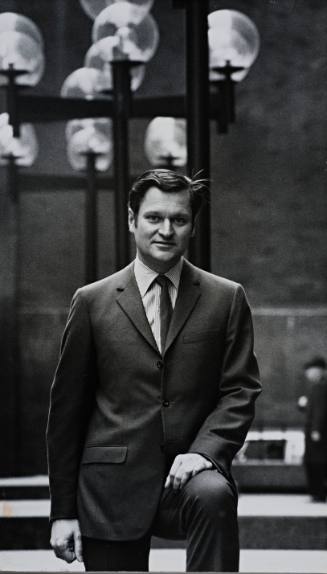
Eero Saarinen, MoMA, New York City
Datec. 1956
Artist
Rosalie Thorne McKenna
(American, 1918-2003)
CultureAmerican
MediumGelatin silver print
DimensionsImage: 8 1/4 x 5 3/8 in. (21 x 13.7 cm)
Matted: 22 x 16 in. (55.9 x 40.6 cm)
Matted: 22 x 16 in. (55.9 x 40.6 cm)
Credit LineGift of the artist
On View
Not on viewPeriod20th c
Classification(s)
InscribedOn verso, by artist, lower center in pencil: MOMA / #10 / Eero Saarinen; in ink: , c. 1956; by unidentified hand, lower right corner in pencil: 87.53.72
MarkingsOn verso, partially obscured stamp center: PHOTO BY: ROLLIE McKENNA / [copyright credit label]; ASMP MEMBER / AMERICAN SOCIETY OF MAGAZINE PHOTOGRAPHERS; stamped lower center: COPYRIGHT
On printed label, on verso center: © Rollie McKenna / 1 Hancox Street / Stonington, CT 06378 / (203) 535-0110/2126
ProvenanceGift of the artistVassar Exhibitions
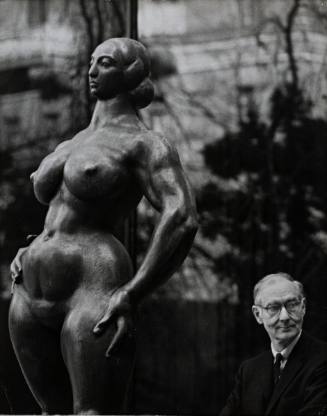
Label TextFor many years, McKenna worked regularly as a contract photographer at MoMA. While the art on display offered a steady source of inspiration, it was often the people in the museum that she photographed. In one unconventional portrait, she captures Finnish American architect Eero Saarinen dressed in formal wear in the MoMA galleries. Saarinen, himself an icon of modernism, is seen in profile, gazing intently overhead, presumably scrutinizing the details of the space. McKenna’s reverence for this consummate professional comes through in this image, as with so many of her portraits. In 1959, she accepted an assignment to photograph Alfred Barr, MoMA’s founding director, whom she deemed the “guiding light of the museum.” No doubt McKenna was aware of Barr’s primary role in shaping the modern canon, which still looms large in the field today. She took numerous images of Barr in various locations in the museum, frequently picturing him with works of art from the collection. The image she selected for print shows Barr in the museum’s iconic sculpture garden dwarfed by a monumental female figure by Gaston Lachaise. McKenna’s images of Saarinen and Barr provide evidence that her portraits represent, in her words, a “rebellion against studio photography.” The environment and circumstances in which her subjects are situated are every bit as important to the composition as the person depicted.
DescriptionProfile of man from waist-up wearing jacket and bowtie, standing in room with lights above and looking up at somethingTerms
Object information is a work in progress and may be updated as new research findings emerge.
To help improve this record, please email
loebcollections@vassar.edu

Rosalie Thorne McKenna
1958
Culture: American