Object number1987.53.40
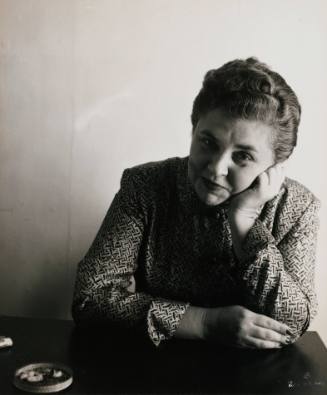
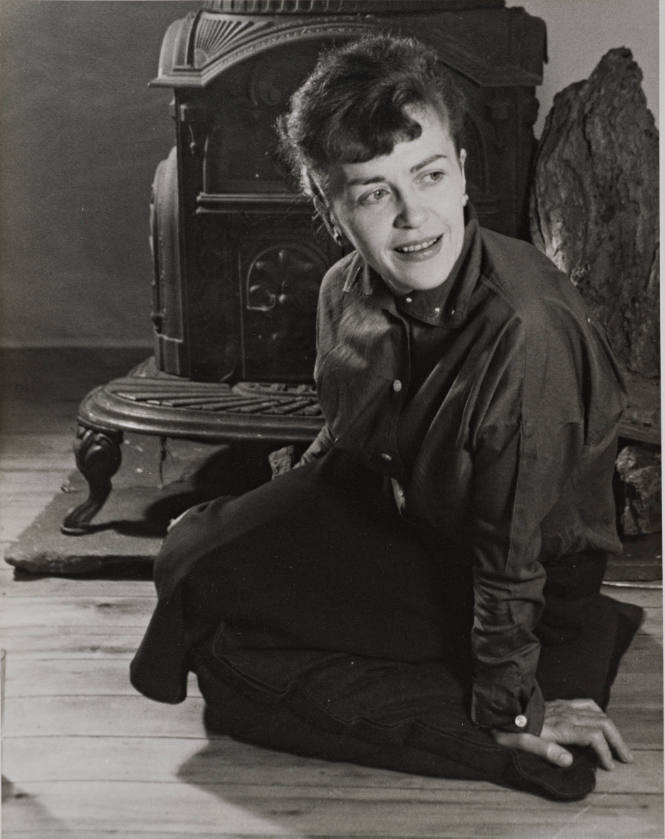
Jean Garrigue
Date1951
Artist
Rosalie Thorne McKenna
(American, 1918-2003)
CultureAmerican
MediumGelatin silver print
DimensionsImage: 9 7/16 x 7 7/16 in. (24 x 18.9 cm)
Sheet: 10 x 7 15/16 in. (25.4 x 20.2 cm)
Matted: 22 x 16 in. (55.9 x 40.6 cm)
Sheet: 10 x 7 15/16 in. (25.4 x 20.2 cm)
Matted: 22 x 16 in. (55.9 x 40.6 cm)
Credit LineGift of the artist
On View
Not on viewPeriod20th c
Classification(s)
InscribedOn verso, by artist, center in pencil: Jean Garrigue, 1951 / #7; by unidentified hand, lower right corner in pencil: 87.53.40
MarkingsOn verso, partially obscured stamp upper center: PHOTO BY: / ROLLIE McKENNA / [copyright credit label] / Please Credit With Photo; stamped center: ASMP MEMBER / AMERICAN SOCIETY OF MAGAZINE PHOTOGRAPHERS; stamped center lower: COPYRIGHT
On printed label, on verso center upper: © Rollie McKenna / 1 Hancox Street / Stonington, CT 06378 / (203) 535-0110/2126
BibliographyRosalie Thorne McKenna, Rollie McKenna: A Life in Photography (New York: Knopf, 1991), 148.
John Malcolm Brinnin and Bill Read, The Modern Poets, An American-British Anthology (McGraw-Hill, 1963), 116.
“Free-Wheeling Portraiture,” Popular Photography (November 1960 edition), page unknown. ProvenanceGift of the artistVassar Exhibitions
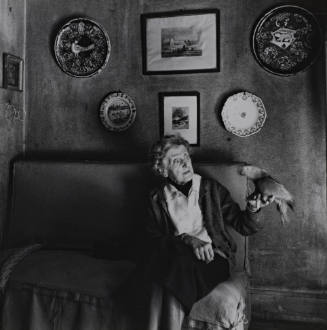
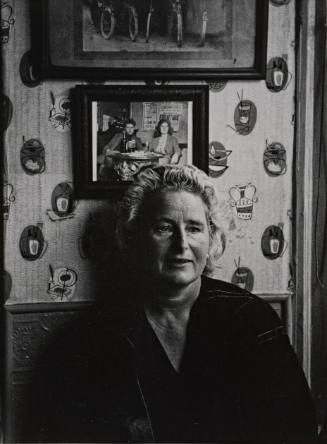
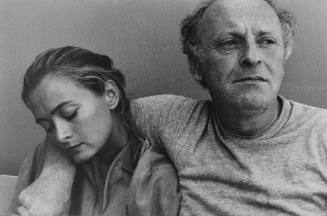
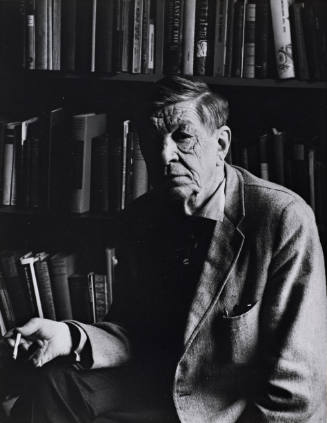
Label TextIn 1950, McKenna met American poet John Malcolm Brinnin. He introduced the young photographer to many modernist poets, and their friendship spanned most of McKenna’s life. When they met, Brinnin served as director of the YM-YWHA Poetry Center, New York (today part of 92NY), where he organized McKenna’s first solo exhibition in 1951, featuring portraits of writers. Portrait photography would soon become McKenna’s bread and butter, introducing her to the literary world and establishing her decades-long career as a freelance photographer. She became known for portraits that defied convention and sought to capture real, human qualities. She scrapped the studio altogether and instead photographed people where they were most comfortable. Her portraits of writers picture them at their desks, often at home and sometimes mid-conversation, having a cigarette, or even sitting casually on the floor. Unlike traditional studio portraits, which to McKenna looked stiff, contrived, and lifeless, her pictures achieved an expressive candidness. “My objection to posed studio photographs,” she said, “is that they tend to have the stamp of the studio or the photographer, and not necessarily of the person.”
DescriptionWoman sitting on pillow on floor in front of wood stove and looking to her leftTerms
Object information is a work in progress and may be updated as new research findings emerge.
To help improve this record, please email
loebcollections@vassar.edu