
Second Sight: Originality, Duplicity, and the Object
Friday, January 14, 2005 - Sunday, April 10, 2005
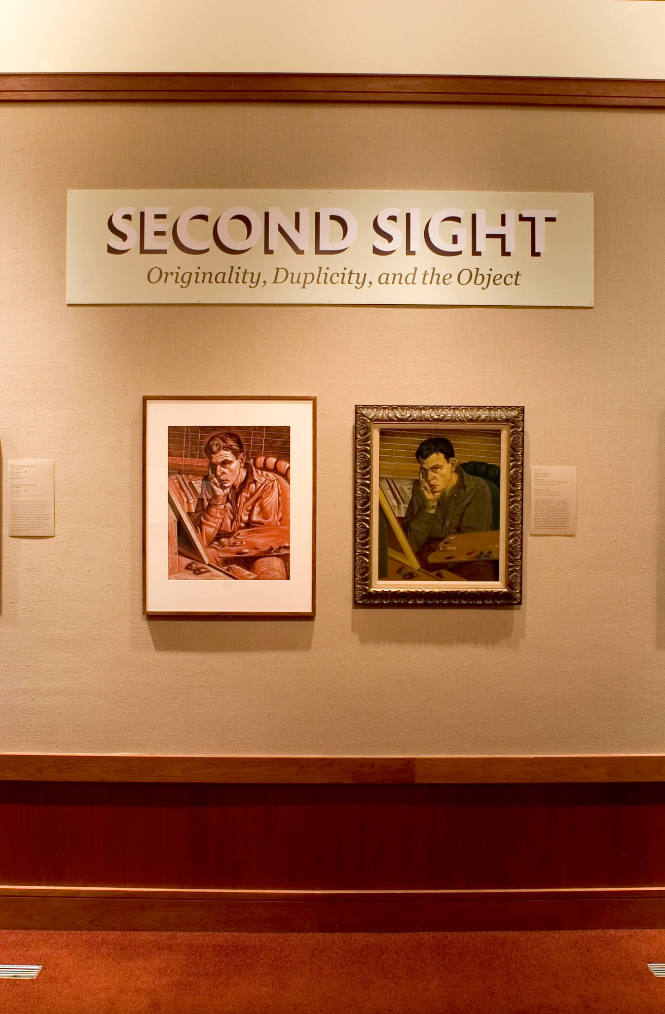
No artwork is an island. Every act of creation has precedents; the fortunate artist is one whose innovations live on through the work of others. While the "originality" of the masterpiece deserves critical praise, an opposite or complementary quality of art should be recognized, too. Call it duplicity, or continuity, or simply relationship. Works of art are united by their commonalities — of technique, motif, subject matter, composition, sensibility. Such associations can span oceans and centuries, join cultures, and link the isolated work of an individual to deep traditions.
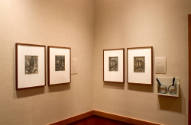
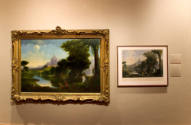
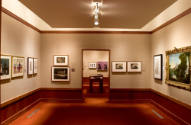
The objects in this exhibition, most of them in the collection of the Frances Lehman Loeb Art Center, related to other artworks on several different levels. Though each case told a unique story, the varieties of relationship explored here comprised three general categories. Most straightforward are the instances of faithful reproduction from an original; included here were copyists' wares, duplicates turned out by an artist's studio staff, rote facsimiles, and products of the art-making process, such as drawings that aided in transferring a design to a mural. Somewhat more involved were cases of creative adaptation: pictures-within-pictures, trompe-l'oeil (fool-the-eye) renderings of artworks in alternative media, figures who popped up in novel contexts years or centuries after their debut, and images that mirrored, contained, or quoted themselves. Finally, some works of art were, in themselves, works of critical interpretation; these included parodies and satires, imitations of another artist's style, the conjurations of the forger (arguably the sincerest flatterer of them all), and works of pastiche, which refer to an entire idiom of school of art rather than a specific object.
The exhibition was organized by The Frances Lehman Loeb Art Center and was made possible by the generous support of The Smart Family Foundation, Inc. There are works that appeared in this exhibition that were loans to the Loeb and therefore do not appear on this website.
The objects in this exhibition, most of them in the collection of the Frances Lehman Loeb Art Center, related to other artworks on several different levels. Though each case told a unique story, the varieties of relationship explored here comprised three general categories. Most straightforward are the instances of faithful reproduction from an original; included here were copyists' wares, duplicates turned out by an artist's studio staff, rote facsimiles, and products of the art-making process, such as drawings that aided in transferring a design to a mural. Somewhat more involved were cases of creative adaptation: pictures-within-pictures, trompe-l'oeil (fool-the-eye) renderings of artworks in alternative media, figures who popped up in novel contexts years or centuries after their debut, and images that mirrored, contained, or quoted themselves. Finally, some works of art were, in themselves, works of critical interpretation; these included parodies and satires, imitations of another artist's style, the conjurations of the forger (arguably the sincerest flatterer of them all), and works of pastiche, which refer to an entire idiom of school of art rather than a specific object.
The exhibition was organized by The Frances Lehman Loeb Art Center and was made possible by the generous support of The Smart Family Foundation, Inc. There are works that appeared in this exhibition that were loans to the Loeb and therefore do not appear on this website.
Venues
Prints and Drawings Galleries