Bunmei Kaika: Political Landscape in Early Modern and Modern Japan
Exhibition Info
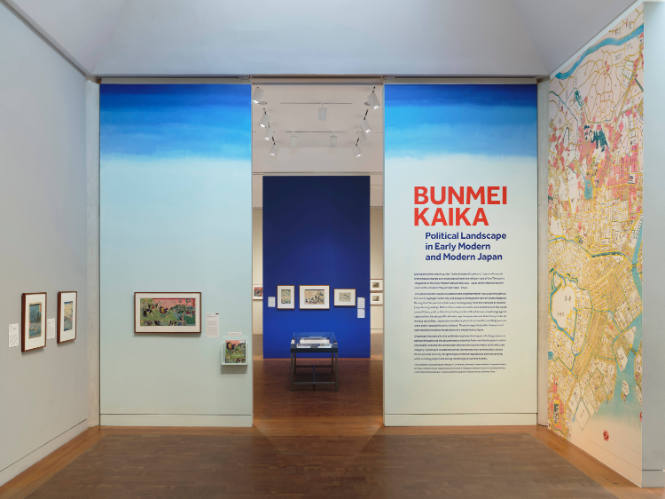
Bunmei Kaika: Political Landscape in Early Modern and Modern JapanSaturday, February 14, 2026 - Sunday, June 7, 2026

This exhibition explores the impact of the political climate during the late Edo period and Meiji era on political thought and dissemination of prints in Japan. Artists traced the shifts in Japan’s culture and its physical landscape throughout a tumultuous time that saw the country opened through American “gunboat diplomacy” followed by rapid Westernization. The motto bunmei kaika, meaning “civilization and enlightenment,” was popularized as Emperor Meiji sought to implement widespread reforms and expand Japan’s sphere of influence. Woodblock prints from the era captured extensive changes at home and reported occurrences on battlefields abroad, circulating sensationalized images that celebrated imperial power. The exhibition illuminates a thriving print culture whose clever navigation of government regulations and prohibitions, playful and daring rendering of current events, and feeding of public interest cultivated the national imagination of a modernizing Japan. Drawn largely from the Loeb’s permanent collection along with select loans, this exhibition sheds new light on landscapes from celebrated artists such as Hiroshige, Hokusai, Kunisada, Yoshitoshi, Kiyochika, and Ogata Gekkō.

Bunmei Kaika: Political Landscape in Early Modern and Modern Japan was organized by Monique D’Almeida, Deknatel Curatorial Fellow in Japanese Works on Paper, and generously supported by the Evelyn B. Metzger Exhibition Fund. The exhibition is accompanied by a richly illustrated catalogue, made possible through the Virginia Herrick Deknatel Fund.
Read MoreRead Less
Sort:
/ 2
Filters
1 to 30 of 40
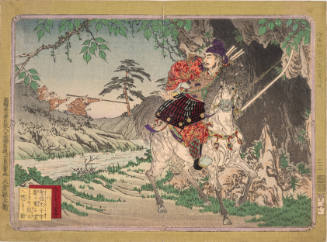
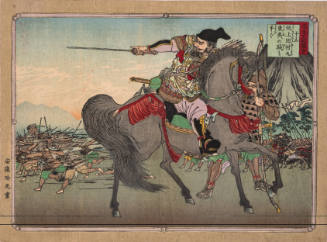
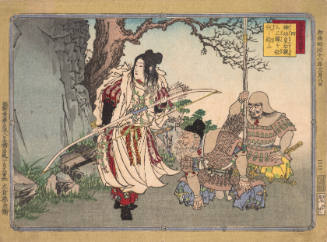
Number 15: Sakanoue Tamuramaro Subdues the Eastern Barbarians
Adachi Ginkō(安達 吟光)
1885
Culture: Japanese
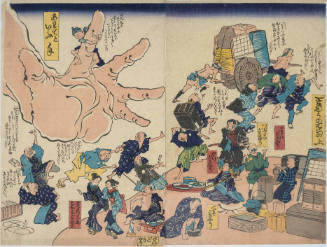
On the Belly of Courage, the Hand of Anxiety
Currently Unidentified
c. 1864
Culture: Japanese
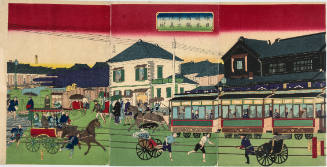
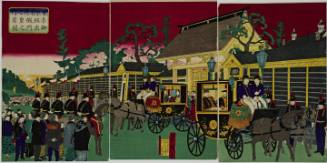
A Real View of Nihonbashi with Horse-Drawn Train
Ōkura Shirōbei
1882
Culture: Japanese
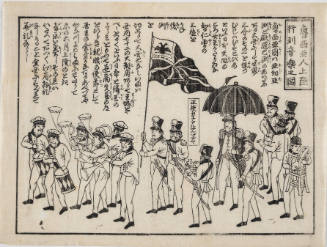
View of Russian Procession Ashore Playing Music
Currently Unidentified
c. 1859
Culture: Japanese
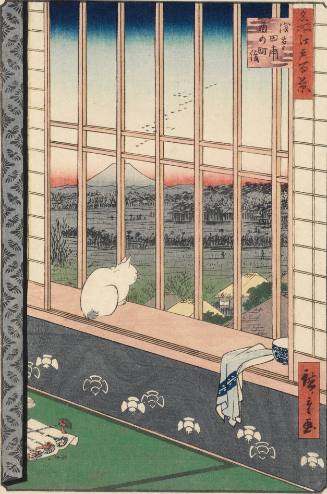
Asakusa Ricefields and Torinomachi Festival
Utagawa Hiroshige (歌川 広重)
1857
Culture: Japanese
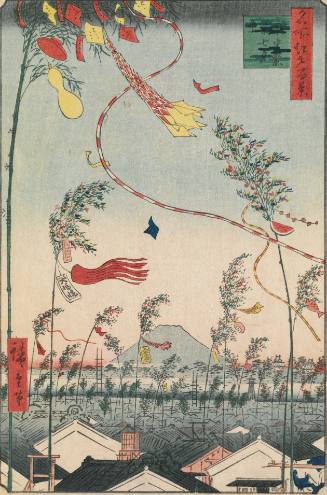
The City Flourishing, Tanabata Festival
Utagawa Hiroshige (歌川 広重)
1857
Culture: Japanese
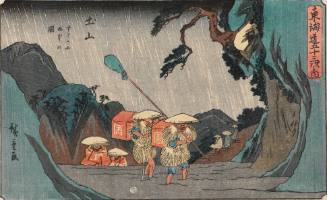
Tsuchiyama: The Suzuka Mountains in the Rain
Utagawa Hiroshige (歌川 広重)
ca. 1845
Culture: Japanese
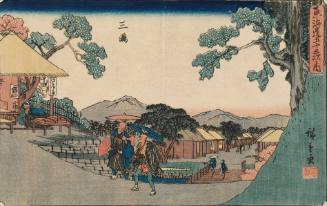
Mishima
Utagawa Hiroshige (歌川 広重)
ca. 1845
Culture: Japanese
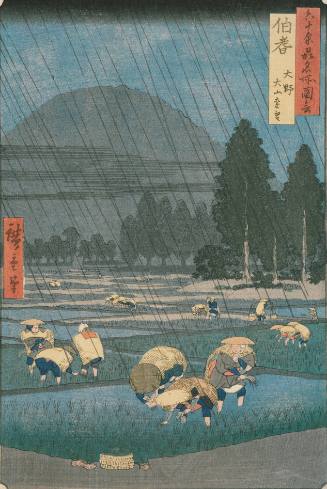
Hōki Province: Ōno, Distant View of Mount Daisen
Utagawa Hiroshige (歌川 広重)
1853
Culture: Japanese
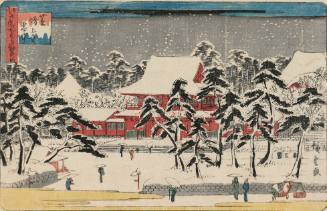
Zōjō-ji Temple at Shiba in the Snow
Utagawa Hiroshige (歌川 広重)
1839-1842
Culture: Japanese
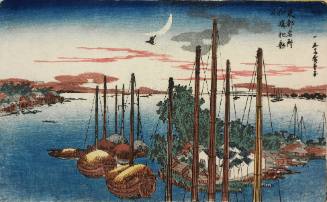
First Cuckoo of the year at Tsukudajima
Utagawa Hiroshige (歌川 広重)
1830-1831
Culture: Japanese
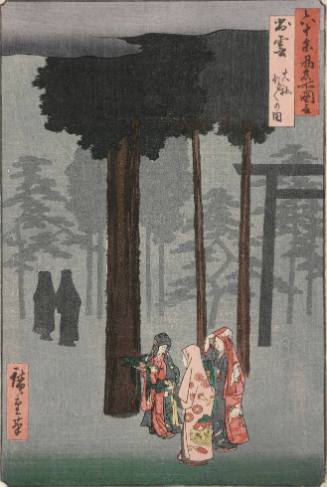
Izumo Province: Taisha, Depiction of Hotohoto
Utagawa Hiroshige (歌川 広重)
1853
Culture: Japanese
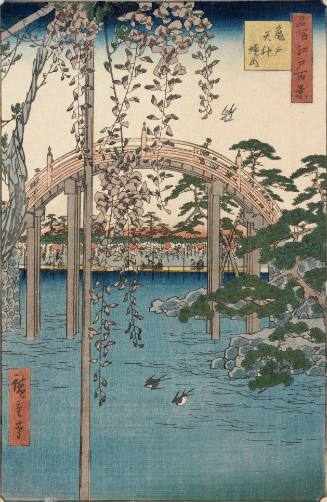
Inside Kameido Tenjin Shrine
Utagawa Hiroshige (歌川 広重)
1856
Culture: Japanese
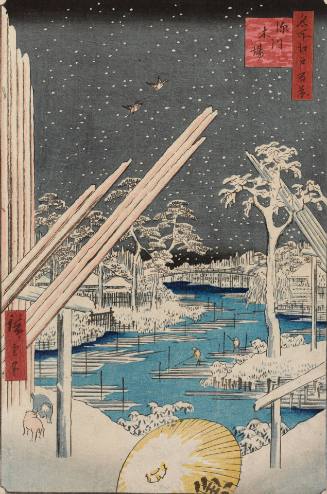
Fukagawa Timberyard
Utagawa Hiroshige (歌川 広重)
1856
Culture: Japanese
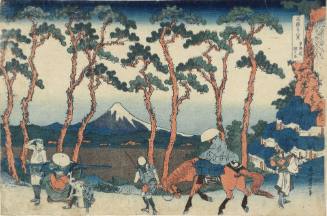
Fuji Seen from Hodogaya
Katsushika Hokusai
1830
Culture: Japanese
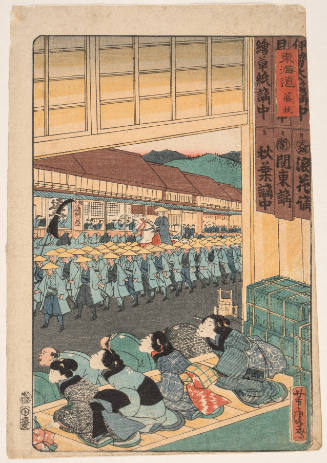
Tōkaidō Fujieda
Utagawa Yoshitora (歌川芳虎)
1863
Culture: Japanese
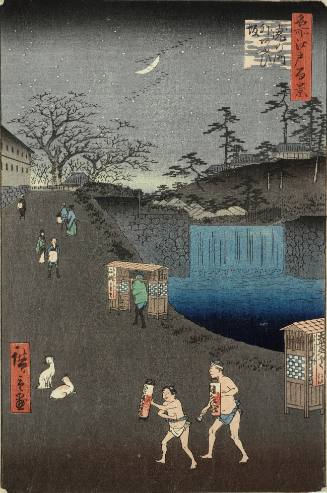
Aoi Slope, Outside Toranomon Gate
Utagawa Hiroshige (歌川 広重)
1857
Culture: Japanese
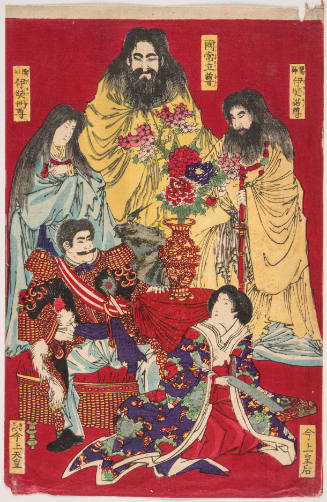
 Mirror of Our Country’s Revered Deities and Esteemed Emperors
Yōshū Chikanobu (楊洲周延)
1878
Culture: Japanese
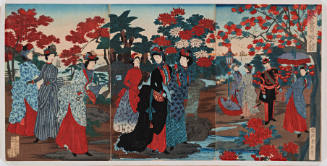
A Contest of Ladies in Enlightened Fashion
Yōshū Chikanobu (楊洲周延)
1888
Culture: Japanese
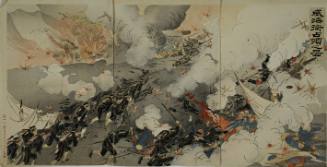
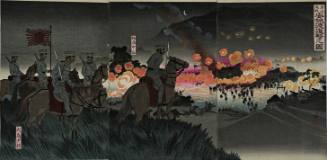
Illustration of the Occupation of Weihaiwei
Ogata Gekko
1895
Culture: Japanese
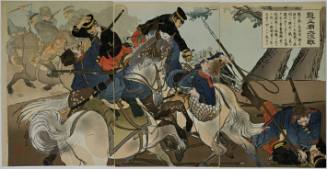
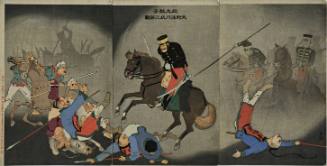
Great Free-for-All Battle at Longwang Temple
Ogata Gessan (尾形月山)
1894
Culture: Japanese
2008.19.16
Kobayashi Kiyochika
1894
Culture: Japanese
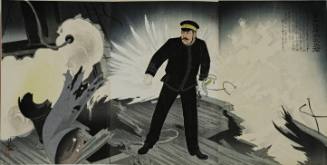
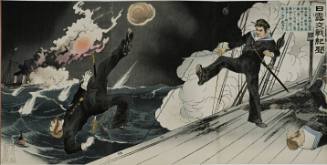
Naval Commander Hirose Takeo
Kobayashi Kiyochika
1904
Culture: Japanese
Desperate Battle of Captain Asakawa at Tuchengzi
Kobayashi Kiyochika
1895
Culture: Japanese
/ 2