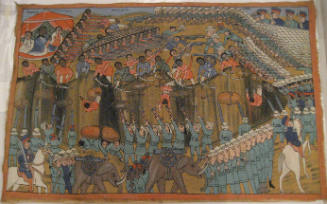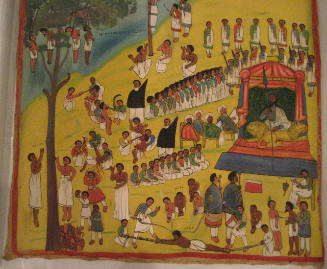
Icons and Empire in Ethiopian Painting
This exhibition explored Ethiopian religion, culture, and politics as they were expressed in 20th century paintings. However, these late paintings were rooted in earlier eras. The introduction of Christianity in the 4th century would have had a profound impact on Ethiopian art. Religious art in the form of manuscript illuminations, church murals, and paintings emerged in the 10th century. In the late 15th century, contact with Portuguese merchants and missionaries gave Ethiopian artists access to a greater range and quality of materials. By the 20th century, Ethiopian painting traditions had split into two distinct genres - religious and secular.
The Dorsky Museum of Art at the State University of New York at New Paltz generously loaned two paintings to augment the exhibition, which was the product of research conducted by several Vassar students enrolled in African history courses. There are works that appeared in this exhibition that were loans to the Loeb and therefore do not appear on this website.