
Surface Tension: Displacement, Archaeology, and Artistry of Urban Water
Saturday, January 21, 2023 - Sunday, April 9, 2023
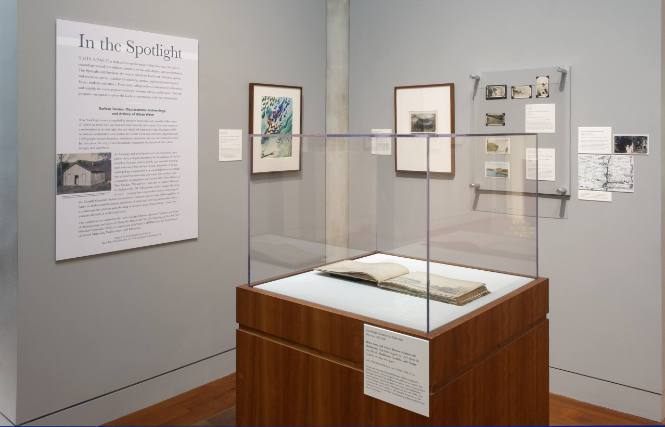
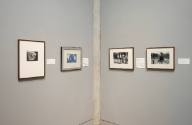
New York City’s water is supplied by nineteen reservoirs and controlled lakes, some of which are more than one hundred miles from the city’s center. The water system is a masterpiece in its own right, but one which left ruins in its wake. Starting in 1906, seventeen communities were destroyed to create seven city reservoirs. Approximately 4,500 people became homeless; abandoned cemeteries are now surrounded by forest. In their place, the city created beautifully engineered but unnatural lakes, dams, bridges, and aqueducts. Archaeology and art help us to see and remember these places. Archaeologists document the foundations of the lost churches, factories, homes, hotels, and sawmills that ring each reservoir. Over the last decade, hundreds of Vassar anthropology students have examined displacement heritage sites around the reservoirs, and some have worked with community organizations such as the Olive Free Library in West Shokan, NY, and the Time and the Valleys Museum in Grahamsville, NY. Meanwhile, artists’ images like those on view—ranging from nineteenth-century renderings of the Catskill Mountains before the reservoirs’ construction, to early-1900s snapshots of dams, to mid-twentieth-century depictions of stone and steel in grand public works, to contemporary photographs showing rural water in an urban setting—reveal the tensions inherent in redirecting water.
This exhibition was curated by the Loeb and April Beisaw, Associate Professor and Chair of Anthropology and author of Taking Our Water for the City: The Archaeology of New York City’s Watershed Communities (2022), in conjunction with Vassar’s MODfest and the Consortium on Forced Migration, Displacement, and Education. Support for In the Spotlight is provided by Mary Ellen Weisl Rudolph ’61, P ’98 and James N. Rudolph P ’98.
This exhibition was curated by the Loeb and April Beisaw, Associate Professor and Chair of Anthropology and author of Taking Our Water for the City: The Archaeology of New York City’s Watershed Communities (2022), in conjunction with Vassar’s MODfest and the Consortium on Forced Migration, Displacement, and Education. Support for In the Spotlight is provided by Mary Ellen Weisl Rudolph ’61, P ’98 and James N. Rudolph P ’98.
Venues
Spotlight Gallery