Myths of the Hudson River School
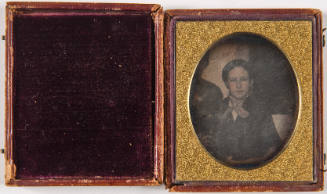
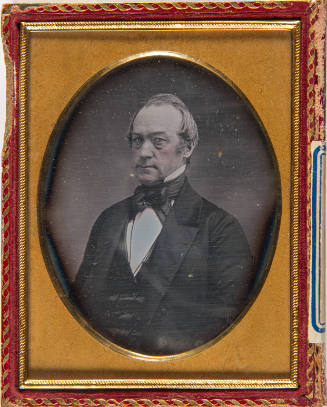
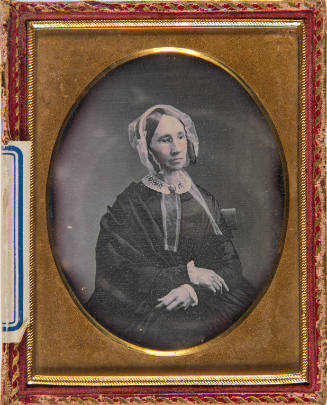
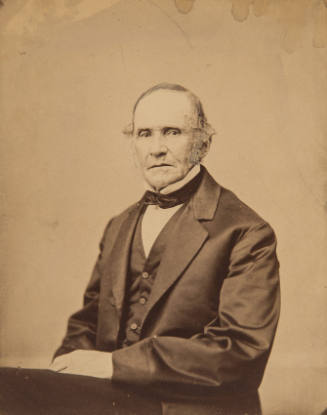
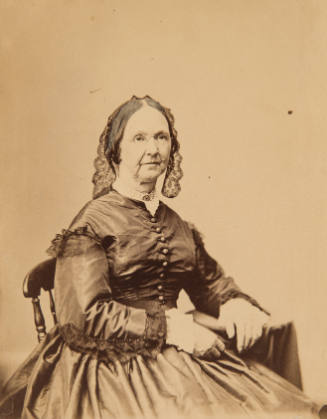
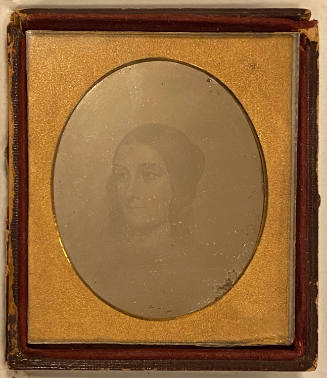
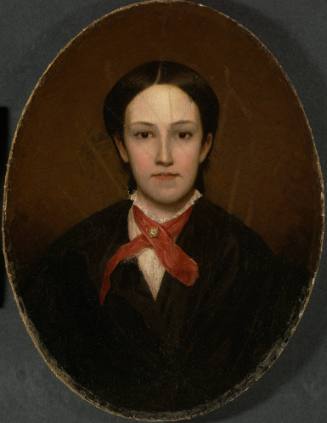
This exhibition presents recently acquired photography and prints that challenge enduring myths about the Hudson River School: Popular narratives portray Hudson River School painters like Sanford Robinson Gifford (1823–1880) as intrepid, solitary geniuses who depicted the Hudson River Valley landscape as pristine and uninhabited. Best known and revered for his idyllic landscapes, Gifford developed his artistic skill in the mid-nineteenth century by painting portraits. His most readily available subjects were family members, including his mother, father, and sisters. At the same time, portrait photography was becoming popular in the United States among middle class, white families like the Giffords. Several daguerreotype portraits of Gifford’s sisters Julia Gifford and Cornelia Gifford, and his mother Eliza Starbuck Gifford, highlight the so-called “domestic sphere”—typically associated with women—as a key locus of Gifford’s artistic development. The daguerreotype of Cornelia Gifford bears a striking similarity to Gifford’s painted portrait, suggesting that the painting was likely modeled after the photograph—an intriguing example of the relationship between early photography and painting. These photographs illuminate how Gifford’s reputation as a painter was supported through domestic and family life, one of countless examples of men’s traditional dependence on the unpaid labor of women in order to cultivate celebrated careers.
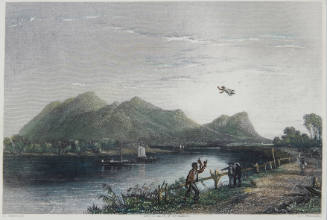
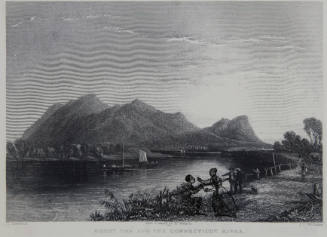
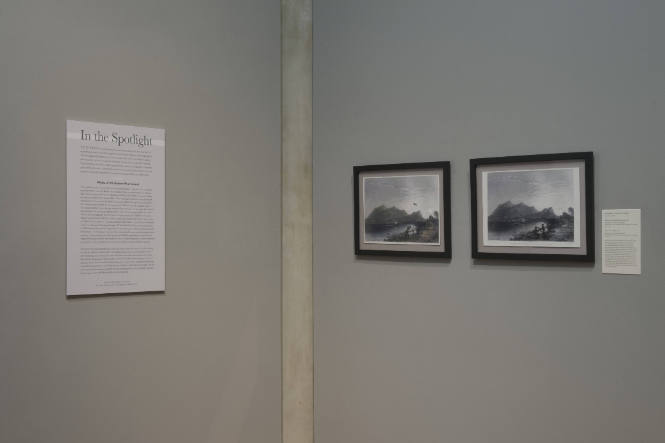
Two prints by local contemporary artist Jean-Marc Superville Sovak directly challenge the Hudson River School myth of untouched landscape by inserting Black figures borrowed from the contemporaneous abolition movement into nineteenth-century illustrations depicting the Hudson River Valley. Describing these settings as “sites of survival,” Sovak shows how the idealized depiction of this area as untouched landscape negated the forced labor and displacement of Black and Indigenous peoples. Sovak’s contemporary interventions highlight the erasure of people of color in popular depictions of this region, especially Hudson River School painting.
Support for In the Spotlight is provided by Mary Ellen Weisl Rudolph ’61, P ’98 and James N. Rudolph P ’98.