Performances on Paper: Japanese Theatrical Prints of the Eighteenth to Ninteenth Centuries
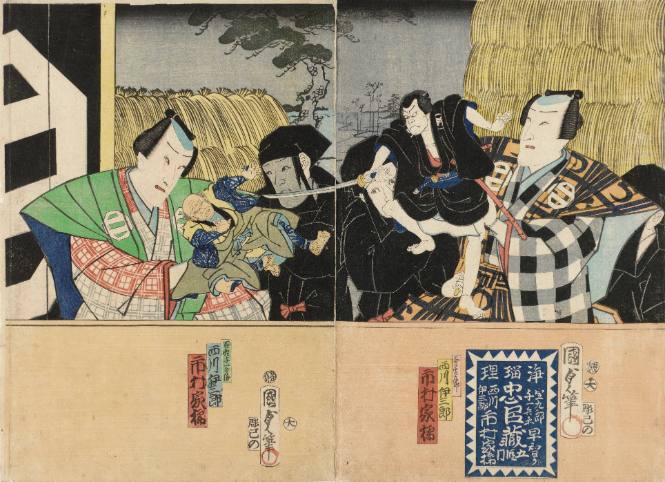
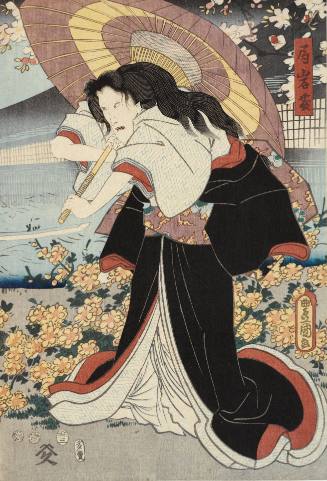
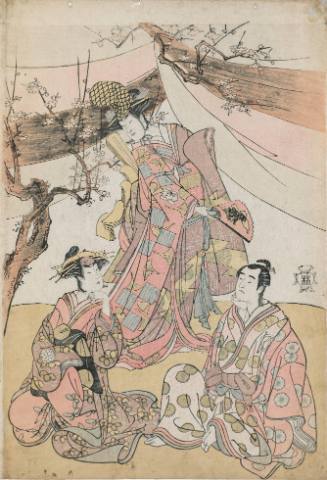
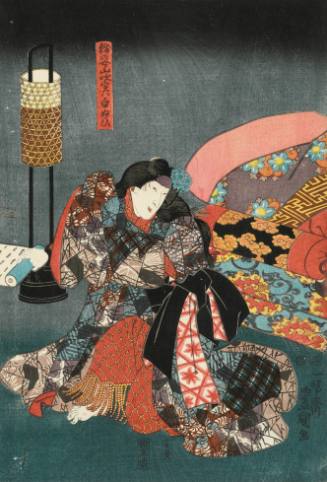
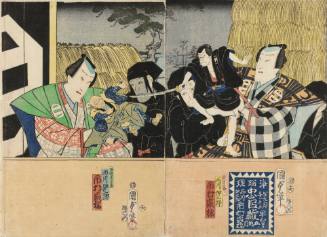
The colorful scenes of fashion and entertainment shown in Japanese woodblock prints reflect the populate culture of the Edo period (1615-1867) and the Meiji period (1868-1912). Known as ukiyo-e or "Pictures of the Floating World," the prints depict the frivolous, carefree "Floating World" of theaters, brothels, restaurants, teahouses and other amusements found in the pleasure quarters of the major cities, Kyoto, Osaka, and especially Edo (modern Tokyo).
One of the most popular amusements, frequently depicted in prints, was the Kabuki theater. Kabuki originated in the early seventeenth century as simple song-and-dance performances by women (and somewhat later by adolescent boys) who often doubled as prostitutes. By the end of the century, however, it had evolved into a complex theatrical form with intricately plotted plays, elaborate costumes and staging, and highly developed acting techniques.
The prints included in this exhibition were from the permanent collection of the Vassar College Art Gallery. The exhibition was organized by Sarah Thompson, Visiting Instructor in Art and Asian Studies and the students in Art 358a, Seminar in Asian Art.
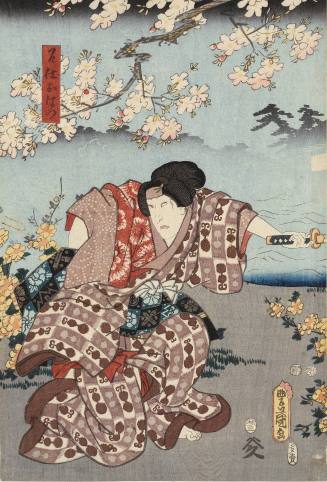
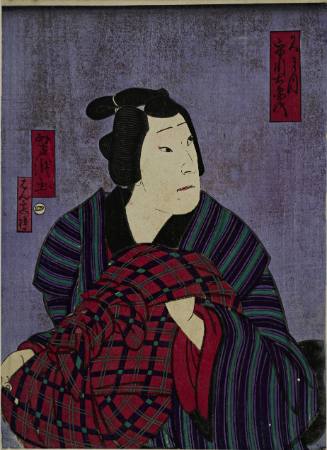
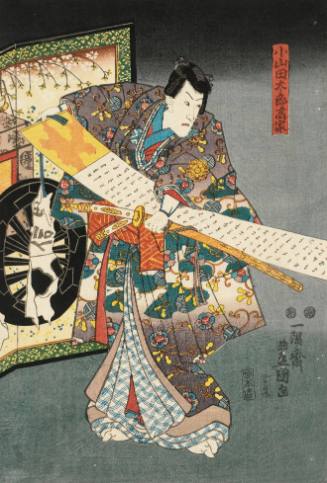
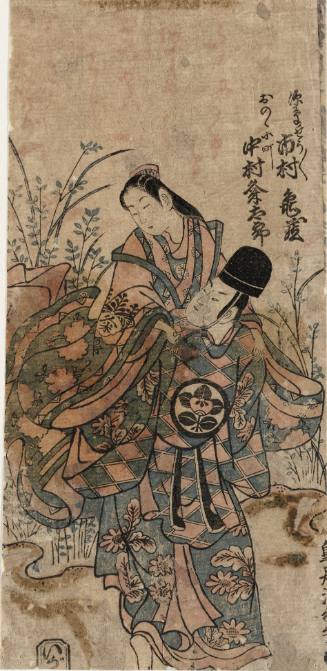
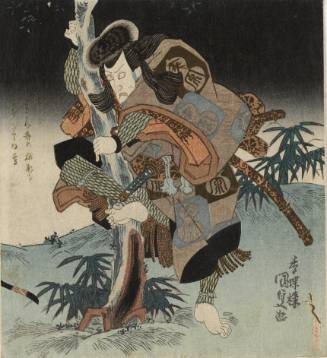


![Yamakatsu Kumaō jitsu ha Washio Sanburo Yoshihisa Bando Mitsugoro [III]](/internal/media/dispatcher/2254/thumbnail)
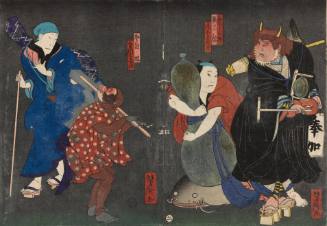
![[The Actors] Onoe Eizaburō and Sawamura Gennosuke](/internal/media/dispatcher/2250/thumbnail)

![[Onoe Kikugorō]](/internal/media/dispatcher/2306/thumbnail)